Archive | Four on Friday RSS feed for this section

Four on Friday: Cozumel Eats

17 Jun

SINCE this seems to be Cozumel Week on this blog (seriously, Mexico travel and tourism ministry, you think I’m going to get my commission anytime soon?) I am continuing the trend with four great places to eat in Cozumel.

1. Casa Denis: This one tops my list coz it stands the test of time. It was, hand’s down, my best meal during a week of delicious meals in Chichén Itzá, Cozumel and Tulum, and it was my best meal this time around, too. It’s the oldest restaurant on the island (or so they claim) and has old black and white photos displayed on the inside wall. The seating is mainly outdoors; sit on the side of the main square rather than the stuffier back. The servers are jovial, the margaritas huge, and the fresh watermelon juice pure heaven. But the reason you should go there is the food. The fish, like everywhere on the island, is fresh as can be; the preparation, divine. I had red snapper (last time it was grouper) rubbed with lime, garlic, and salt. I can’t think of a simpler seasoning but combined, it made magic in my mouth. I asked our server for the recipe, and this is what he said:

Delicious margarita at Casa Denis

Delicious margarita at Casa Denis

To prepare the garlic, cut it into fine pieces and toss it in olive oil with lime, white wine and jugo de Maggi (Maggi sauce, that you can buy in Cozumel). Once the garlic is ready, marinate the fish with lime, salt, pepper and garlic, and then grill or cook in a pan.

We brought a travel-sized bottle of the Maggie jugo back with us, and I can’t wait to try making the dish myself. But I know it won’t touch what we had at Casa Denis, and I can’t imagine it’ll be too long before we’ll be back there to have the real thing!

132 Calle 1. #987-872-0067

2. Tio José: This little place, which is called “Uncle José” is a humble eatery right by the water, close to the lighthouse. You can get a seat outside on the terrace or on the beach itself. I highly recommend the fish tacos (super simple, with tomatoes and lettuce and pickled onions—oh, those onions! I could write odes to those onions) and the pork tacos and the micheladas—beer mixed with lime, hot sauce, and salt. Best eaten with the sea breeze lightly ruffling your hair. And after you’re done, you can pull on your flippers and snorkel mask and wade into the water, as a number of families were doing when we were there.

One half block east of the intersection of Avenida 65 and Calle 11 on the south side of the street.

Fish tacos at Tio Jose

Fish tacos at Tio Jose

3. Chen Rio: This seaside shack on the eastern side of the island was recommended to us by a local for its excellent seafood. Accessible only through the lone paved road that connects the tourist-stuffed western side—bulging with cruise liners, “flea markets” and high-end jewelery stores—to the calmer, deserted eastern side, Chen Rio was still surprisingly crowded, a testament to how far folks are willing to drive for fresh lobster. If you’re in a group of four, you can get the seafood platter, with fish, shrimp, lobster and conch. Being only two of us, we settled for the shrimp and lobster platter, which was more than enough. There were no fancy sauces or delicate arrangements, just fresh white meat on lettuce and tomato, with a side of fries and four slices of avocado. They provide plenty of salt and wedges of lime; sprinkle liberally and dig in!

The Chen Rio seaside shack

The Chen Rio seaside shack

Our partially devoured lobster and shrimp platter at Chen Rio

Our partially devoured lobster and shrimp platter at Chen Rio

After we were done eating, we queried our waiter about the provenance of the lobster. In answer, he pointed at a fishing boat that was just coming to shore. Off the boat and onto the plates! It doesn’t get any fresher than that.

The other awesome thing about Chen Rio is that, like Tio José, the beach it sits on is perfect for snorkeling or swimming. It’s protected by a ring of rocks that take the ferocity of the waves, leaving the enclosed space gentle and welcoming. To the left is a natural kiddie pool, a high bar of sand that creates a shallow pool, only two or three feet deep, where the tots can splash about in safety.

Costera Este Highway 3.5 miles, north Cozumel 77600.
The back garden at Kinta

The back garden at Kinta

4. Kinta: This is where you want to go for date night in Cozumel. Ask to be seated in the back garden. Artfully placed fronds shield you from your fellow diners; lights shine through stenciled out iguana sculptures clinging to the walls; and the red-and-black color scheme is just plain romantic. They have variations on the standard margarita—hibiscus or jasmine, anyone?—and an innovative, oft-changing menu. It seems to change so often, in fact, that I can’t find the appetizer that I devoured a mere week ago on their website! It was so good that I recommend asking for it by name if it’s not on the current rotation. It’s called the cherry bomb, and it’s four perfectly round balls of fried conch and other stuff that set off fireworks in my mouth. You look at the artful presentation, the mélange of flavors, the bringing together of the familiar and the surprising, and you know that there’s a real chef behind every dish. I won’t recommend other specific dishes, but if you want delicious food in a beautiful setting, you must pay a visit to Kinta.

Av. 5 between Calles 2 and 4, Cozumel, Quintana Roo, 77600. #987-869-0544

Four on Friday: Oldies but Goodies

10 Jun

THIS is my oh-my-goodness-I-just-realized-I’m-not-gonna-be-here-on-Friday-to-write-this-so-I-better-put-on-my-thinking-cap-and-fast! post. These are videos/articles from my past that I’m reviving because I think they’re funny enough to deserve a second look. Plus, I didn’t have a blog back then, so how can I be sure that all my dear readers saw them?

1. The Onion is always amusing, but this news item was bitingly witty: Gap Between Rich And Poor Named 8th Wonder Of The World.

At a press conference Tuesday, the World Heritage Committee officially recognized the Gap Between Rich and Poor as the “Eighth Wonder of the World,” describing the global wealth divide as the “most colossal and enduring of mankind’s creations.”

“Of all the epic structures the human race has devised, none is more staggering or imposing than the Gap Between Rich and Poor,” committee chairman Henri Jean-Baptiste said. “It is a tremendous, millennia-old expanse that fills us with both wonder and humility.”

“And thanks to careful maintenance through the ages, this massive relic survives intact, instilling in each new generation a sense of awe,” Jean- Baptiste added.

2. AWESOME video of pets being asked to refrain from eating all the food in sight. Such a task might even be difficult for me if you surrounded me with, say, bars of Scharffen Berger dark chocolate. But the pooches (and chimp) in this video hold up admirably and oh so sweetly. (Sorry, you have to be logged onto Facebook for this to work; double sorry, the image is merely a screen shot; you need to click on this link to actually watch the video.)

3. Speaking of videos, here’s an old one of the trials of fact-checkers. I used to be a fact-checker myself, back in 2007 when I was interning for The Nation, so this really cracks me up.

http://player.ordienetworks.com/flash/fodplayer.swf

4. And finally, this is the best job ad EVER.

We want to add some talent to the Sarasota Herald-Tribune investigative team. Every serious candidate should have a proven track record of conceiving, reporting and writing stellar investigative pieces that provoke change. However, our ideal candidate has also cursed out an editor, had spokespeople hang up on them in anger and threatened to resign at least once because some fool wanted to screw around with their perfect lede.

We do a mix of quick hit investigative work when events call for it and mini-projects that might run for a few days. But every year we like to put together a project way too ambitious for a paper our size because we dream that one day Walt Bogdanich will have to say: “I can’t believe the Sarasota Whatever-Tribune cost me my 20th Pulitzer.” As many of you already know, those kinds of projects can be hellish, soul-sucking, doubt-inducing affairs. But if you’re the type of sicko who likes holing up in a tiny, closed  office with reporters of questionable hygiene to build databases from scratch by hand-entering thousands of pages of documents to take on powerful people and institutions that wish you were dead, all for the glorious reward of having readers pick up the paper and glance at your potential prize-winning epic as they flip their way to the Jumble… well, if that sounds like journalism Heaven, then you’re our kind of sicko.

For those unaware of Florida’s reputation, it’s arguably the best news state in the country and not just because of the great public records laws. We have all kinds of corruption, violence and scumbaggery. The 9/11 terrorists trained here. Bush read My Pet Goat here. Our elections are colossal clusterfucks. Our new governor once ran a health care company that got hit with a record fine because of rampant Medicare fraud. We have hurricanes, wildfires, tar balls, bedbugs, diseased citrus trees and an entire town overrun by giant roaches (only one of those things is made up). And we have Disney World and beaches, so bring the whole family.

Send questions, or a resume/cover letter/links to clips to my email address below. If you already have your dream job, please pass this along to someone whose skills you covet. Thanks.

This particular position has no doubt already been filled (who could resist a job wanted ad like that?) but perhaps the Sarasota Herald-Tribune has another vacancy.

5. This is the secret bonus track on this week’s album. Since I’m doing less work for this blog post than I usually do, here’s an extra one for free. Enjoy.

Four on Friday: The Men Choose

3 Jun

SO this week I was wondering what I’d do my weekly four-things-I-want-to-share-with-the-world post about, and the answer landed in my inbox. (Actually, it pinged me via Facebook, but inbox sounds better.) A friend—a male friend—sent me something (that has by now no doubt made its way around the world a couple dozen times) and said he thought I’d like to see it. The following day, another friend, also a guy, found me on Gmail chat and sent me a link to a podcast he thought I should write about on this blog. The men in my life seemed to be choosing this moment (well, three out of four of them anyway) to tell me about cool/interesting/weird things they wanted me to know about, so why not take advantage of it? So here’s my first reader-generated blog post.

1. If I were to start in strictly chronological order, this would have to go first. My friend Hasnain emailed me an article more than a month ago and I meant to write about it then (and I have the draft to prove it) but somehow it never got written. (A weekend trip to the Catskills may have gotten in the way.) It came back into my life through this fresh BBC post. From my incomplete draft:

April has not been a good month to be a blogger in India [May wasn’t much better and June is not looking so good either]. On April 11, the Department of Information Technology greatly tightened the rules governing Internet speech laws in the country, adding many broad and vaguely defined instances in which the government could shut down your website. A few days later, the U.S.-based watchdog organization Freedom House released its report on Freedom on the Net in India, and we didn’t do so well. Though India has no substantial political censorship, according to the report, bloggers and online users have been arrested in the past year, and our press freedom status is only “partly free.”

Many of the new “rules” stand out. Amongst the tidbits of personal information that can be collected from you, the Internet user, are  “physical, physiological and mental health condition,” and, most bewilderingly, “sexual orientation.” Seriously? It’s not clear whether giving out this information is mandatory or not, but given that it can be handed over to the government for a number of reasons, it’s troubling, at best.
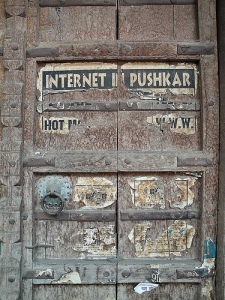
Canadian media artist runran, who took this photograph, says that Internet speeds in Pushkar, India, are akin to paint drying

Canadian media artist runran, who took this photograph, says that Internet speeds in Pushkar, India, are akin to paint drying

Even more disturbing is this rule, which prohibits Internet users from displaying or hosting information that “is grossly harmful, harassing, blasphemous, defamatory, obscene, pornographic, paedophilic, libellous, invasive of another’s privacy, hateful, or racially, ethnically objectionable, disparaging, relating or encouraging money laundering or gambling, or otherwise unlawful in any manner whatever; harm[s] minors in any way” or “threatens the unity, integrity, defence, security or sovereignty of India, friendly relations with foreign states, or or public order or causes incitement to the commission of any cognisable offence or prevents investigation of any offence or is insulting any other nation.”

From the BBC post:

The onus on host websites to remove objectionable content is a cause for concern to Mahesh Murthy who runs Pinstorm, a digital marketing agency in Mumbai which manages clients’ online brand presence.

“Any individual can write to us and say that piece of content offends us and without any recourse we have to take it down,” he says.

“This gives us an extremely onerous responsibility to be able to police every bit of content before it goes out,” adds Mr Murthy.

The new guidelines are, in part, a response to the 2008 terrorist attacks in Mumbai, planned with the help of cell phones and anonymous email addresses. And other governments have similarly restrictive rules. But India’s record in using vague laws to go after its political opponents is not reassuring anyone.

2. The Facebook pinger, my friend Zed, sent me this Guardian article with British author V.S. Naipaul’s inflammatory remarks. In an interview with the Royal Geographic Society this week, he claimed that he considers no female writer his match. You’ve no doubt read or heard of this piece, which has been causing so much furor in the UK and here in the United States, already, but here are some choice bits:

In an interview at the Royal Geographic Society on Tuesday about his career, Naipaul, who has been described as the “greatest living writer of English prose”, was asked if he considered any woman writer his literary match. He replied: “I don’t think so.” Of [Jane] Austen he said he “couldn’t possibly share her sentimental ambitions, her sentimental sense of the world”.

And also:

The author, who was born in Trinidad, said this was because of women’s “sentimentality, the narrow view of the world”. “And inevitably for a woman, she is not a complete master of a house, so that comes over in her writing too,” he said.

But the part that spawned a mini-series of follow-ups was his claim to be able to tell work written by a man as opposed to a woman from a short sample:

He said: “I read a piece of writing and within a paragraph or two I know whether it is by a woman or not. I think [it is] unequal to me.”
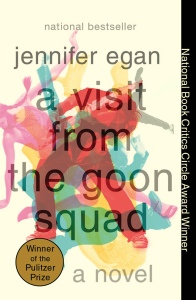
A Visit from the Goon Squad by Jennifer Egan

A Visit from the Goon Squad by Jennifer Egan

The Guardian humorously decided to query its readers to find out who among us can claim the same perspicacity as the Nobel Laureate with their “Naipaul test.” (Through sheer guesswork, I scored five out of 10.) The UK’s Telegraph also devised a similar test, though with five samples only. (In that one, I only guessed one correctly, and ironically, I guessed that the excerpt by Naipaul himself had been written by a woman. Wonder what Naipaul would make of that.)

Naipaul has been given enough publicity in the past week, what with his reconciliation—after a period of 15 years—with Paul Theroux over the weekend, and now this. This Wall Street Journal blog had the right idea, when it published an interview with Jennifer Egan, the 2011 winner of the Pulitzer Prize for her novel A Visit from the Goon Squad (which, coincidentally, I just finished reading this past weekend), in which she said:

He may feel like he’s dealt a difficult and painful blow to women, but he makes himself look silly and outdated. And honestly, pretty vain.

Read this 1998 interview Naipaul gave to The New Yorker for an insightful portrait of the author.

UPDATE: I just came across this piece in the Indian newspaper Mint (where I’ve published several travelogues over the years) by Supriya Nair, which impressed me so much that I’m tempted to quote it in full. But that’s bad blogger etiquette, so here are the bits I liked best:

[Y]ou’ve probably seen these charts that came out earlier this year, which ran some numbers on how many women writers were reviewed in America’s top literary magazines — and how many women reviewers wrote for these publications. In some of the Anglophone world’s most liberal, forward-thinking — indeed, downright groundbreaking — publications, the imbalance on these counts isn’t small. In fact, it’s shocking.

Go look at those charts again. I’ll wait.

So, as you can see, women writers have bigger things to worry about other than VS Naipaul not liking their feminine sensibilities. (I mean, what next? Gay writers too caught up in unimportant things like sexuality? Japanese writers write too much about Japan? Derek Walcott just not understanding the West Indies? I’m agog, Naipaul. Agog!)

But — are they really bigger things? When I read Naipaul’s reported statements, after I laughed at him as you laugh at Internet trolls, I couldn’t help but think of the literary establishment responsible for the negligible importance given to women writers and reviewers, as the VIDA numbers demonstrate. VS Naipaul is a Nobel Laureate, read, reviewed and debated extensively — not to mention celebrated — in the pages of global opinion-makers like Harper’s Magazine (number of male reviewers in 2010: 27. Number of female reviewers: 7). And The New York Review of Books (number of male authors reviewed in 2010: 306. Number of female authors reviewed: 59). The New Yorker (male reviewers: 29. Female reviewers: 8).

Go read the full post here.

3. My friend Irfan (sometime Gmail chatter and full-time Canadian resident) sent me a link to this CBC podcast the other day, with this endorsement:

I was just amazed at this woman’s strength, courage, determination and vision.
The odds were heavily stacked against her. The environment, very hostile. Her demographic, a woman in a male dominated society.
She has a great vision to rebuild her country especially the weakest and most vulnerable…the women and children of Afghanistan.
I couldn’t help but admire her guts and her resolve.
She is winning in a society where the best of men hv failed.

How could I not listen? The interview was conducted on CBC’s The Current, with Anna Maria Tremonti, and the interviewee was Afghanistan’s first female deputy speaker of Parliament, Fawzia Koofi. The segment begins and ends with a letter Koofi reads to her preadolescent girls in case she is killed. At the time she wrote these letters, she was receiving death threats regularly. Happily, she survived to publish a memoir, Letters to My Daughters, and to garner enough support in Afghanistan that she is thinking of running in the presidential elections in her country.

Letter to my Daughters by Fawzia Koofi

Letter to my Daughters by Fawzia Koofi

Koofi was the 19th of 23 children, born to the second of her father’s seven wives. In the interview, she says, “My mother didn’t want me to be alive because she wanted me to be a son” so as not to disappoint her husband, Koofi’s father. So they put the newborn out in the sun to die.”I think for a woman, being a woman is a vulnerability sometimes,” she says.

But Koofi survived her first day, and has overcome numerous obstacles since. She was the first in her family to be educated. Her father, who was a Member of Parliament, was killed by mujahideen when she was a toddler. She had to fight with her brothers to be allowed to stand in election. Her stepbrothers would tear down her election posters when they saw them plastered on walls in public. They didn’t want their sister’s face to be displayed in public. “It’s like ownership,” Koofi said. But Koofi was already working by that time, and was financially independent, and so she prevailed. Now, she says proudly, in the last elections where she won a second term, all her brothers stood by her and supported her, putting up the previously reviled posters up in nearby villages to help her campaign efforts.

Now, at age 35, Koofi is a single parent (her husband died in 2003), a Member of Parliament, and a passionate activist for democracy and for human rights and women’s rights in Afghanistan. She is the kind of role model she found in Indira Gandhi, the Prime Minister of India when Koofi was a child.

In an interview she gave to Canadian newspaper The Globe and Mail, she said: “I want to tell to the world, as a woman who has lived through all the situations, that women can make a difference. I want to show how strong Afghan women are.”
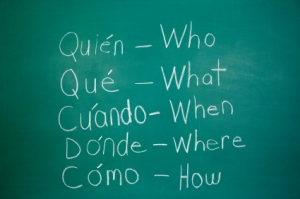
Spanish Class; courtesy cappex.com

Spanish Class; courtesy cappex.com

4. The final piece of this Four on Friday post comes from my husband, Jatin, who has just begun learning Spanish. Yesterday he came home from his Spanish class with a fascinating bit of information that he knew I would enjoy: in most countries where Spanish is the native language, most women don’t take their husbands names when they marry (I didn’t take my husband’s surname when we married). Not only that, when they have children, the kids’ last names come from both parents’ last names. As About.com explains it, “If Juan López Marcos marries María Covas Callas, their child would end up with a name such as Mario López Covas.”

I’ve always thought that children should have the names of both their parents—and am delighted to know that the Spanish (thanks to an Arabic influence) have been following this democratic custom for decades and maybe even centuries.

Four on Friday: The Injustice to Women Edition

27 May

OK, now I’m really mad. The universe is conspiring to give women around the world a really bad deal. (Though it did find fugitive from justice Ratko Mladic, the Bosnian Serb general infamous for orchestrating the 1995 massacre in Srebrenica in which some 8,000 Muslim men and boys were murdered, among other war crimes. But other than this late-week bit of good news, it’s been pretty depressing.)

1. A Lancet study came out this Tuesday on the selective abortion of girls in India. The preliminary census numbers released by the government in April already showed that the number of girls aged 0-6 had declined overall from 927 girls to 1000 boys in 2001, to 914 girls in 2011—the lowest it has been since India won its independence in 1947. The Lancet study found:

The conditional sex ratio for second-order births when the firstborn was a girl fell from 906 per 1000 boys…in 1990 to 836…in 2005; an annual decline of 0·52%… Declines were much greater in mothers with 10 or more years of education than in mothers with no education, and in wealthier households compared with poorer households.

It added:

After adjusting for excess mortality rates in girls, our estimates of number of selective abortions of girls rose from 0—2·0 million in the 1980s, to 1·2—4·1 million in the 1990s, and to 3·1—6·0 million in the 2000s… Selective abortions of girls totalled about 4·2—12·1 million from 1980—2010, with a greater rate of increase in the 1990s than in the 2000s.

Despite making it illegal for Indian parents to learn the sex of the foetus through the 1994 Pre-Conception and Pre-Natal Diagnostic Techniques Act(PDF), followed by a Supreme Court directive to the worst offending states to enforce the Act, there is little to no punishment for breaking the law, and female foeticide is a common occurrence. The practice is worse in educated and affluent families, and even the states that didn’t display a trend of sex-selective abortion are now starting to kill their unborn daughters. Plus, this phenomenon knows no borders: not only are Indians skewing the sex ratio in India, they are also carrying this abhorrent practice with them when they emigrate to other countries. Continue reading

Four on Friday: The Second Edition

20 May

CONTINUING with this blog post format (see the inaugural post here), here are the four things I think you should know about the world from the past week.

1. Roseanne Barr’s kick-ass piece in New York magazine about sexism in television. For those of you who don’t remember, she was the star of the ABC sitcom Roseanne about a working-class family in Illinois. It was one of the most-watched shows on television in the nineties, and often dealt with taboo subjects such as pornography, abortion, domestic violence and gay rights. It was ahead of its time when it aired, and remains pretty radical now. When’s the last time you saw a blue-collar, woman-centric show with nary a platinum blond or a pair of stilettos in sight?

Continue reading