Four on Friday: Reclaiming Streets, Language and More

1 Jul
SlutWalk London 2011 by Garry Knight

SlutWalk London 2011 by Garry Knight

1. ONE afternoon almost a decade ago I was walking from my house in Bombay to Breach Candy, a 15-20 walk, and about five minutes in, I noticed that there was a man following me. I don’t remember what he looked like, or what he was wearing—he was a typical Roadside Romeo, one of those lewd, cat-calling types who like to sing suggestive Bollywood songs and make like an octopus with their grabby hands, that women in India encounter daily on the streets.

I had been followed by men before, and I tried all my usual tricks to throw him off. I stopped to enjoy the view of a park, hoping he would pass me by. He didn’t. I strolled into a nearby store, browsing the jewellery on sale, lingering over the silver section, but when I walked back out, he was across the street, waiting. Our eyes met and he gave me a cheeky wave. I had been irritated before, but now I was seething. On the next corner I saw a policeman, and I stalked right up to him. The words rushed out of me, how this person had followed me all the way from home, and how I had tried to lose him but he kept right behind me, and now this, the final straw, him waving knowingly, as though to say, “I’m still here. I’ll always be here. You can never be free on the streets of the city.”

While I was talking, people started listening in, as they are wont to do, and offering their own opinions. One Parsi lady, with hair fully white and cut in a bob, offered her support and congratulated me on doing something about it. Two women in salwar kameezes nodded knowingly; this had happened to them many times. A few men, enraged on my behalf, marched over to the man, who by this point was trying to slink away, unnoticed. They dragged him over to face the policeman, and I, who am not normally known for my bloodthirstiness, I was fiercely glad. They formed a knot around the man, who had no more sly smiles left in him, and I heard the sound of palm meeting flesh.

I walked away then, feeling powerful and vindicated. This was for all those times that a man had stuck out a hand and grabbed a body part that did not belong to him, for those moments of embarrassment and humiliation when I had had to walk past a group of men who were determined to undress me with their eyes, for the shock and violation caused by their crude comments and the baring of their privates—something that every woman, in India and around the world, has had to endure at some point or another in their life.

2. That’s why I’m so glad that an organization like Hollaback! exists, and that it has come to India. Hollaback! is an international movement to stop street harassment using mobile technology. Their “about” page says:

Street harassment is one of the most pervasive forms of gender-based violence and one of the least legislated against… [It] is rarely reported, and it’s culturally accepted as ‘the price you pay’ for being a woman or for being gay. At Hollaback!, we don’t buy it.

We believe that everyone has a right to feel safe and confident without being objectified. Sexual harassment is a gateway crime that creates a cultural environment that makes gender-based violence OK… The explosion of mobile technology has given us an unprecedented opportunity to end street harassment… By collecting women and LGBTQ folks’ stories and pictures in a safe and share-able way with our very own mobile phone applications, Hollaback! is creating a crowd-sourced initiative to end street harassment. Hollaback! breaks the silence that has perpetuated sexual violence internationally, asserts that any and all gender-based violence is unacceptable, and creates a world where we have an option—and, more importantly—a response.

The way it works is this: if you have been harassed, you can take a photograph of the harasser with your smartphone (using their Droid or iPhone app; global apps to come this summer) or a digital camera, if you have one handy, map your location, and share your story on your local Hollaback! website. And as the Mumbai site says, participate in the Main Hoon Na! campaign: “The Main Hoon Na Campaign provides real options to people who want to help end street harassment with a simple message: If you see someone being harassed, go to them and ask them if they are OK, and if there is anything you can do to help.”

It’s simple, but powerful. So the next time you see someone on the street being harassed by a Roadside Romeo, shout, make a ruckus, tell a cop, take a photograph, or simply offer your support.

Why Loiter?: Women and Risk on Mumbai Streets

Why Loiter?: Women and Risk on Mumbai Streets

Speaking of safely strolling down the street, a book came out earlier this year which addresses this very issue and I am dying to read it. It’s called Why Loiter? Women and Risk on Mumbai Streets and it’s by three formidable women, Shilpa Phadke, Sameera Khan, and Shilpa Ranade. The authors argue that “though women’s access to urban public space has increased, they still do not have an equal claim to public space in the city” and they draw from feminist theory to argue that “only by celebrating loitering—a radical act for most Indian women—can a truly equal, global city be created.”

Mumbai is famously safe. Unlike Delhi, which has acquired a bhayanak reputation, what with taxi drivers raping tourists and terrible tales of gang rape at gunpoint, Mumbai is supposed to be safe for women (well, relatively speaking, anyway). And indeed, even with my occasional encounters with leering, lunging men, I usually feel safe in my hometown as well. Why Loiter? shatters that belief.

As this review in Himal says:

The authors take us on an insightful and eventful journey, though one that leaves the reader a mite frazzled. Whirring through the bustling bylanes of Dongri and Nagpada, the posh Malabar Hill and Ballard Estate, middle-class Shivaji Park and the teeming gallis of Dharavi, we glimpse the array of women out on the streets, in the bus stops and parks. They take us on a desperate (and unsuccessful) search for a ‘ladies’ toilet in Andheri Station; a squashy ride in the ubiquitous local train; leave us breathless after a brisk walk across the Oval Maidan, where no woman must linger; and finally allow us to feel the sea breeze on the Marine Drive promenade. The book breathes Bombay, Bambai and Mumbai; it never lets us forget that there are distinct worlds in this city of 21 million. From the eyes of women, these worlds, separated by class, caste and religion, are hard to reconcile with the stereotypes of the freewheeling ‘Bombay girl’.

In a section on public toilets, the authors write, “If public toilets were to be your guide to imagining the city, what would they say about Mumbai? First, they would imply that there are very few women in public as compared to men… Second, they would suggest that if Mumbai women need to pee, they do so at home… And third, they would say, since even fewer facilities are open after 9pm, respectable women have no business being out in public after dark.”

Loitering without purpose, they say, is a way to reclaim public space, and I am going out right now (ok, when I finish this post) to go do some loitering of my own. It’s on the streets of New York, true, but no doubt I will attract at least a curious, assessing glance or two. I will go stand on the street corner, and not pretend to be texting someone, or waiting for a friend, looking impatiently at my watch, or window-shopping while walking slowly to my destination. I will loiter, because it’s my city too, and I am claiming its streets.

I am going to do my part in creating a city “with street corners full of women: chatting, laughing, breastfeeding, exchanging corporate notes or planning protest meetings. If one can imagine that, one can imagine a radically altered city.”

3. Many of you will have heard by now of the SlutWalk movement which began in Toronto this past January when a local cop, Constable Michael Sanguinetti, told students at York University during a safety information session that “women should avoid dressing like sluts in order not to be victimized.” Despicable remarks, and from someone who should have known better. People get assaulted every day, regardless of what they are wearing. The madonna/whore dichotomy is ancient and damaging and sadly, still in use. The women in Toronto had had enough, and they organized a SlutWalk, a march of women down to the police headquarters, in protest.

SlutWalk Ottawa by Rebecca Wolsak

SlutWalk Ottawa by Rebecca Wolsak

The movement spread like wildfire around the world, and to India: Delhi will hold its first SlutWalk in July. Though the word “slut” itself doesn’t hold the resonance in India that it does in the rest of the English-speaking world, the sentiment behind it is the same. As this DNA India article detailed:

According to the National Crime Records Bureau (NCRB), there is a rape every 18 hours, and molestation every 14 hours in Delhi. One of every four rapes in India is committed in the capital. Only one in 69 rape cases in India are reported; just 20% of these cases result in conviction of the rape accused. In other words, the chance of a rapist being sent to jail is 0.28%.

These are figures we should all be bitterly ashamed of—and do something to change. You can start by listening to Jaclyn Friedman’s amazing speech at the Boston SlutWalk. Here are a few snippets:

Well hello you beautiful sluts!

Do you see what I did there? I called y’all sluts, and I don’t know the first thing about what any of you do with your private parts. (Well, maybe I know about a couple of you, but I’ll never tell.)

That’s how the word “slut” usually works. If you ask ten people, you get ten different definitions. Is a slut a girl who has sex too young? With too many partners? With too little committment? Who enjoys herself too much? Who ought to be more quiet about it, or more ashamed? Is a slut just a woman who dresses too blatantly to attract sexual attention? And what do any of these words even mean? What’s too young, too many partners, too little committment, too much enjoyment, too blatant an outfit? For that matter, what’s a woman, and does a slut have to be one?

For a word with so little meaning, it sure is a vicious weapon. And, while the people who use it to hurt may not agree on what they mean by it, they’ll all agree on one thing: a slut is NOT THEM. A slut is other. A slut is someone, usually a woman, who’s stepped outside of the very narrow lane that good girls are supposed to stay within. Sluts are loud. We’re messy. We don’t behave. In fact, the original definition of “slut” meant “untidy woman.” But since we live in a world that relies on women to be tidy in all ways, to be quiet and obedient and agreeable and available (but never aggressive), those of us who color outside of the lines get called sluts. And that word is meant to keep us in line. To separate us. To make us police each other, turn on each other, and turn each other in so that we can prove we’re not “like that.” That word comes with such consequences that many of us rightly work to avoid it at all costs.

But not today. Today we all march under the banner of sluthood. Today we come together to say: you can call us that name, but we will not shut up. You can call us that name but we will not cede our bodies or our lives. You can call us that name, but you can never again use it to excuse the violence that is done to us under that name every single fucking day.

Friedman ended with this rousing call:

If you’ve ever been called a slut, stand up now and say together—I am a slut. If you love someone who’s been called a slut—stand up now and say, I am a slut. If you’ve ever been afraid of being called a slut, stand up now and say, I am a slut. If you’ve been blamed for violence that someone else did to you, stand up now and say, I am a slut. If you’re here to demand a world in which what we do with our bodies is nobody’s business, and we can all live our lives and pursue our pleasures free of shame, blame and free, stand up and say it with me: I am a slut. I am a slut. I am a slut.

So SlutWalk Delhi, ignore the catcalls and the cynics who will try to pull you down, and let’s all say together: You can call me a slut, or a kutiya (bitch), a chinaal or randi (whore), but that doesn’t give you the license to commit violence upon my body.

Bossypants by Tina Fey

4. And thanks to my friend Meghana for bringing this excellent HuffPo article to my attention. (Meghana has a little girl of her own, who’s so smart she can say my name already, so she’s on top of this parenting stuff.) In it, the author recounts meeting the five-year-old daughter of a friend for the first time. Despite wanting to coo over how adorable she looked, the author made herself talk to the child about her love for books. Because it’s the constant discussing and praising of the way our daughters look—over the praising of achievements—that has led to the American girl’s obsession with physical appearance.

This week ABC news reported that nearly half of all three- to six-year-old girls worry about being fat. In my book, Think: Straight Talk for Women to Stay Smart in a Dumbed-Down World, I reveal that fifteen to eighteen percent of girls under twelve now wear mascara, eyeliner and lipstick regularly; eating disorders are up and self-esteem is down; and twenty-five percent of young American women would rather win America’s Next Top Model than the Nobel Peace Prize. Even bright, successful college women say they’d rather be hot than smart. A Miami mom just died from cosmetic surgery, leaving behind two teenagers. This keeps happening, and it breaks my heart.

Read the entire article here. And the next time you see that little girl in your life, give her a book. Maybe Tina Fey’s Bossypants.

Copycat: Copy Editing Because No One Else Will

28 Jun
Copycat

Copycat

HAS anyone else looked at articles in the South Asian press and wondered why no one caught all those typos, formatting errors, and just plain bad English that seems to afflict so many of them? Not to mention shoddy reporting and badly written prose. Surely there are copy editors loitering around newspaper offices, with red pencil in hand, just waiting for an incorrect spelling or a dangling clause to put to rights? An editor somewhere who recognizes that sentences must have verbs and to send the writer in question back to the computer to fill in the blanks? How do they sleep at night, these sub-editors/copy-editors, proofreaders and editors, seeing the most basic rules of grammar violated in so many (albeit sometimes imaginative) ways? Somewhere, the souls of Strunk & White are shriveling up in horror that unedited, illiterate reams of newsprint are making their way onto breakfast tables and iPad screens in various parts of the Indian subcontinent. (Or maybe not.)

Since there seems to be a vacancy for a decent editor, I have decided to fill it. Thus, every so often, when I come across something particularly illiterate—or when you, dear reader, send me something you would like to see the way it was meant to be written—I will whip out my red pencil and attempt to cross, correct and craft the offending article into shape. (As one unnamed South Asian author said, “Nerd Heaven!”)

Here’s my first attempt. Just for shock value, take a look at the article as was originally written. Did you sigh in exasperated recognition? Then read on for my edits (additions in caps and sometimes in bold):

Fitness firm sacks rape victim after FIR

NEW DELHI: YESTERDAY/INSERT DATE A 24-year-old woman, who works as a physical trainer AT TKTKTK, has alleged that she was raped twice in the changing room of a gym at the Delhi Development Authority sports complex in Sector 11, Dwarka, first by the manager and then by another trainer.

Both the accused, [[WHO ARE THESE NAMELESS ACCUSED? INSERT NAMES AND AGES HERE]], WHO ARE FROM Meerut, BUT currently LIVE in west Delhi, have been remanded to 14 days’ judicial custody. THEY WERE ARRESTED ON [[INSERT DATE HERE]].

Shockingly, the victim WAS FIRED by [[INSERT NAME OF HER EMPLOYER HERE]], the private fitness training company WHERE SHE WORKS, after the incidents [[OR THE POLICE COMPLAINT?]], along with the accused, [[WHO ALSO WORKED THERE?]].

GET QUOTE FROM THE COMPANY HERE ABOUT WHY THEY FIRED THE VICTIM AND THE ACCUSED. GET QUOTES FROM THE VICTIM’S FAMILY IF POSSIBLE.

ALSO GET A QUOTE FROM THE DELHI DEVELOPMENT AUTHORITY ON THE SAFETY OF THEIR SPORTS COMPLEXES AND FROM A GYM MEMBER WHO USES THAT PARTICULAR COMPLEX, AND PERHAPS A FELLOW TRAINER, ON WHETHER OR NOT THEY FEEL SAFE WORKING OUT THERE.

The woman, a resident of Mangolpuri [[IN TIMBUKTU? OR A NEIGHBOURHOOD OF DELHI?]], is separated from her husband and has filed for divorce [[HOW ARE THESE DETAILS RELEVANT? THEY IMPLY THAT HER MARITAL STATUS HAS SOMETHING TO DO WITH HER ASSAULTS. CUT]]. Sources [[WHO ARE THESE MYSTERIOUS SOURCES? GIVE US SOME NAMES PLEASE]] claimed she landed [[USE ANOTHER WORD—TOO COLLOQUIAL]] the job through a friend, another gym trainer AT [[INSERT NAME OF EMPLOYER HERE]] who was a friend of Ajay [[INSERT LAST NAME HERE]], one of the accused.

The police [[WHO FROM THE POLICE? USE THE PERSON’S NAME HERE AND INCLUDE HIS OR HER JOB TITLE AND RANK]] said the woman was transferred from the Paschim Vihar branch of the fitness centre TO THE DWARKA BRANCH on June 15 to undergo training as an instructor, [[BECAUSE….?]]. According to THE POLICE complaint SHE FILED, ON JUNE 19, Ajay [[INSERT LAST NAME HERE]], A TRAINER AT THE PASCHIM VIHAR SPORTS COMPLEX, approached her around 11 am on June 19 with a white powder after she had complained of a headache. [[ADD DETAILS—WHAT DID AJAY SAY THE WHITE POWDER WAS?]] The victim reportedly felt dizzy after having the powder [[IN A GLASS OF WATER? INHALING IT LIKE COCAINE?]] and went to THE changing room [[WAS IT A WOMEN’S CHANGING ROOM? A UNISEX ONE? WAS IT EMPTY?]] to sit DOWN. The accused followed her there and raped her. [[DID SHE SCREAM? WHY DID NO ONE HEAR HER? IF THE ASSAULT TOOK PLACE IN THE MORNING, SURELY THERE WAS SOMEONE AROUND WHO WOULD HAVE HEARD. CANVAS THE GYM TO SEE IF THERE WERE ANY OTHER STAFFERS OR GYM MEMBERS AROUND; PERHAPS A JANITOR HEARD? AND THEN WHEN DID THE MANAGER OF THE COMPLEX RAPE HER? HOW IS HE INVOLVED? HOW DID SHE LEAVE AFTER THE ASSAULT OR ASSAULTS? WAS SHE THREATENED TO KEEP QUIET OR WAS SHE ALLOWED TO LEAVE?]]

“The victim said out of fear she did not tell anyone about the attack,” claimed one of her acquaintances [[WHO IS THIS ACQUAINTANCE? WHAT WAS SHE SCARED OF? AND THEN WHAT PROMPTED HER TO COME FORWARD AND FILE A COMPLAINT? DID SOMETHING HAPPEN TO MAKE HER STOP BEING AFRAID?]].

According to the complaint, the victim’s mother was threatened by the accused and her boyfriend beaten up when they came to the DDA complex [[THESE DETAILS NEED MORE EXPLANATION—WHEN DID THEY COME TO THE SPORTS COMPLEX? DID SHE ASK THEM TO FETCH HER AFTER SHE WAS ATTACKED? IS THIS ON JUNE 19 OR ANOTHER DATE? WHO THREATENED THE MOTHER? WHO BEAT UP THE BOYFRIEND? WHAT ARE THE NAMES OF THE MOTHER AND BOYFRIEND? TRY TO GET A QUOTE FROM THEM]]. The boyfriend was taken to Deen Dayal Upadhyay Hospital [[THE CLOSEST HOSPITAL, PERHAPS?)]] for treatment [[FOR WHAT? A SPLIT LIP? SOMETHING MORE SERIOUS?]] after which an FIR [[A FIRST INFORMATION REPORT]] was registered [[BY THE BOYFRIEND? PLEASE DON’T LEAVE US IN SUSPENSE!]].

“After getting the medical report of the victim, the police filed an FIR of rape against the duo and they were arrested,” said the police official [[WHICH POLICE OFFICIAL? NAME, JOB TITLE AND RANK HERE PLEASE]].

According to the DDA officials, the contract for maintaining and running the gym had been awarded to Himanshu Bhardwaj, director of SAB fitness and training centre [[THIS INFORMATION NEEDS TO COME HIGHER UP. ALSO WE NEED MORE INFORMATION ABOUT SAB FITNESS—FOR INSTANCE, ON THEIR WEBSITE THEY ADVERTISE THEIR SERVICES TO RUN GYMS OWNED BY OTHERS. HOW MANY SUCH ARRANGEMENTS DO THEY HAVE? WHO’S LIABLE IF SOMETHING HAPPENS AT ONE OF THESE LOCATIONS? HAVE THEY EVER FACED COMPLAINTS BEFORE OF INAPPROPRIATE BEHAVIOUR? WHAT KIND OF SCREENING PROCESS DO PHYSICAL TRAINERS GO THROUGH BEFORE THEY ARE HIRED? HOW MANY TRAINERS DO THEY HIRE? WHAT’S THE RATIO OF MEN TO WOMEN? ETC]]. The accused and the victim were employees of this fitness center.

“I don’t know if these allegations are true but the contradictory statements given by the woman indicate that the trainer is being framed. I don’t want to comment further as the matter is under investigation,” Bhardwaj said. [[DON’T LET HIM GET AWAY WITH A STATEMENT LIKE THAT—WHAT ARE THE “CONTRADICTORY STATEMENTS”? I DON’T SEE ANY CONTRADICTORY STATEMENTS SO FAR—ONLY INCOMPLETE ONES. WHY WOULD THE TRAINER BE FRAMED? ALSO, YOU GET THIS QUOTE FROM HIM WHICH EXPRESSES HIS DISBELIEF THAT HIS TRAINER’S ACCUSATIONS ARE FALSE, BUT DON’T QUESTION HIM ON WHY SHE WAS FIRED?]]

He said the victim HAS BEEN EMPLOYED for the past six months, while the accused were working for him for around a year.

NOTES: THE ONLY QUOTES IN THIS STORY ARE FROM AN UNNAMED POLICE OFFICIAL, AN UNNAMED SOURCE WHO COMMENTS ON THE VICTIM’S STATE OF MIND, AND THE EMPLOYER WHO FIRED THE VICTIM AND THE ACCUSED. NO QUOTES FROM THE VICTIM OR SOMEONE FROM THE VICTIM’S FAMILY, NO IDENTIFIED FRIENDS OR FAMILY, NO QUOTES FROM A WOMEN’S ORGANIZATION/RAPE SHELTER, OR A LAWYER, OR A UNION REP, ON WHETHER HER FIRING WAS EVEN CONSTITUTIONAL.


No offense to the writers and editors at the fine publication where this article originally appeared—my aim with the Copycat post (this is the first one but hopefully there will be more to come) is to make a virtual contribution to journalism in the region where I first learned to write and edit, not to single out any particular person or paper.

And if you come across any articles that are begging for the Copycat treatment, do send them my way via the comments section below or through the Contact form.

Four on Friday: The India Files

24 Jun

FOUR tidbits from the homeland this week.

1. Coke Studio has come to India! For those of you new to Coke Studio, it began in Pakistan four years ago, as a television show sponsored by Coca-Cola featuring live music and collaborations between Pakistani folk, eastern, classical, and contemporary musicians. It has become a runaway hit, and there is nothing quite like it in the region.

From the melodies in Pashto and Dari to the pop compositions of Strings and Ali Zafar, from the sweet voices of Zeb and Haniya to the gravelly Garaj Baras rendition by Ali Azmat and Rahat Fateh Ali Khan and the irresistibly foot-tapping Chambey di Booti (Jugni) by Arif Lohar and Meesha Shafi, Coke Studio Pakistan enchants and delights. It doesn’t matter that you don’t know what the lyrics mean or what that instrument is called, it draws you in and doesn’t let you go.

Noori in Coke Studio Pakistan

Noori in Coke Studio Pakistan

In a behind-the-scenes Newsline interview, Coke Studio Pakistan’s producer, Rohail Hyatt talks about the show’s beginnings and what he hopes to achieve with it. Hyatt laments the fading out of traditional music and said he hopes the music show will provide a new platform for dying musical languages. He adds that Coke Studio isn’t “a commercial platform, it’s become commercial because people have liked it, but it was never meant to be. We have never succumbed to the pressures like, ‘Oh God, there are so many fans now that we have to cater to the public taste.’ In fact, it’s even more experimental this time.”

Asked about Coca-Cola taking the show to India, Hyatt is hopeful. “From what I am seeing and hearing, India is also trying to reinvent itself. Trying to totally steer away from Bollywood. Just look at the palette they have in terms of raw talent. Music is part of their philosophy. With a palette like that, you could paint a very interesting picture.”

It’s true that Indian radio stations play Bollywood beats obsessively, and it’s only in recent years that non-movie songs by Rabbi Shergill, Kailash Kher and others have made it to FM. As composer-singer Shankar Mahadevan—who featured in the first episode—told NDTV, “Bollywood is huge, I admit, but isn’t our country huge too?”

As someone who only discovered Coke Studio earlier this year, I didn’t have quite as long to wait for Coca-Cola to bring their venture to India. Perhaps that’s why I don’t share the skepticism of long-time fans when Coke Studio India, officially known as Coke Studio@MTV, debuted in India last Friday at 7 p.m. on the popular music channel. The blog Kafila pronounced, “The unanimous verdict is that Coke Studio India (first aired on the Friday that went by) is no match for Coke Studio Pakistan.”

But Coke Studio Pakistan is mature, and in its fourth season, having produced more than 80 songs; Coke Studio@MTV is six tunes old—an infant in comparison. It’s true, the Indian show could lose the flashing strobe lights and nightclub-like atmosphere, and there’s a lot out there apart from drums and catchy beats, but I for one enjoyed the debut and am looking forward to more. (Watch the first six episodes here.)

The second show is tonight. I, for one, am holding back on the criticism and am cheering with all my might. As much as MTV channel head Aditya Swamy says, “We are not at all worried about TRPs. All we want is to promote pure music [and] youngsters to enjoy the sound of various regions of India,” I am in no hurry to lose a genuine attempt to foster dialogue between India’s diverse musicians to low ratings and an indifferent audience.

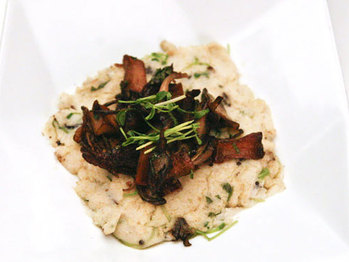
Upma as prepared by Top Chef winner Floyd Cardoz

Upma as prepared by Top Chef winner Floyd Cardoz

2. Speaking of success stories, I was buoyed to learn of Indian chef Floyd Cardoz taking home the top prize in the 2011 season of the reality show Top Chef Masters. Top Chef—my favorite cooking show—is a competition among chefs featuring unusual challenges. Past episodes have featured cook-outs on the beach, with the chefs catching the seafood they will serve; cooking with no utensils; cooking with whatever ingredients are on board a ferry; cooking meals reminiscent of their childhoods; cooking healthy versions of the favorite meals of contestants on The Biggest Loser, a weight-loss reality show; creating their own restaurants; and more.

Fellow Mumbaikar Floyd Cardoz won for his preparation of the South Indian upma (as part of a three-course meal that also included a rice-crusted snapper in fennel-laced broth and a reinterpreted version of a beef stew called rendang). Not my first choice at an Udipi restaurant, but still so exciting! Cardoz’s $100,000 grand prize will be donated to the Young Scientist Cancer Research Fund in memory of his father, who died of cancer. After his win, Cardoz tweeted, “Woke up with a hangover. that’s what a magnum of Dom does to you when you celebrate a #TopChefMasters win. I welcome this headache anytime.”

Cardoz, recently of the Indo-French restaurant Tabla, which shut its doors last December, is the new chef of the forthcoming Danny Meyer seafood restaurant in Battery Park, North End Grill. Am looking forward to trying it out!

Meanwhile, here’s his recipe for upma if Top Chef inspired you to give it a try:

Wild Mushroom Upma Polenta with Kokum & Coconut Milk

Four servings

Ingredients

2 cups cream of wheat
3 tablespoons canola oil
1 teaspoon mustard seeds
1 teaspoon cumin
4 tablespoons butter
2 tablespoons shallots
1 tablespoon ginger
1 tablespoon chillies
3 cups chicken stock
3 cups coconut milk
Salt and pepper, to taste
Cilantro, as garnish
Pea shoots, as garnish
Mushrooms
3 tablespoons canola oil
1/2 cup oyster mushrooms
1/2 cup Maitake
1/2 cup king oyster mushrooms
2 shallots
1 chilli pepper
1 knob ginger
Salt and pepper, to taste
2 tablespoons butter
1/4 cup white port
1 tablespoons cilantro, chopped

Directions
1. Heat oil and cream of wheat and toast for 10 minutes on low heat. Remove from pan
2. Heat oil mixture then add mustard seeds and whisk until seeds pop. Add cumin and reserve
3. Heat pan. Add spice oil and butter. Add shallots, ginger, chillies, and cook for 2-4 minutes. Add cream of wheat and cook for 3-4 minutes. Add stock and coconut milk. Mix and cook. Simmer
4. Should be smooth.

Directions for mushrooms
1. Heat oil in sauté pan. Add mushrooms and cook with lightly coloured sear
2. Add butter, shallots, ginger and chilli
3. Deglaze with white port
4. Season with salt and pepper and cilantro.

3. You’ve probably heard of “coyotes” who bring Mexican undocumented immigrants across the border to the United States for hefty sums; in India, the coyotes are called “linemen” and they’re not much different. So says Scott Carney in the new issue of Foreign Policy, in his excellent story, “Fortress India.” In it, Carney describes a “Berlin Wall” that is being constructed by India on its border with Bangladesh, to keep its northern neighbors out. The wall has been in existence since the late 1980s, and is close to completion—the final section will be completed in 2012.

Shockingly—or perhaps, not so shockingly—the Indian Border Security Force guarding the wall has notched up nearly 1,000 killings since 2000, roughly two per week. Carney writes:

In India, the 25-year-old border fence — finally expected to be completed next year at a cost of $1.2 billion — is celebrated as a panacea for a whole range of national neuroses: Islamist terrorism, illegal immigrants stealing Indian jobs, the refugee crisis that could ensue should a climate catastrophe ravage South Asia. But for Bangladeshis, the fence has come to embody the irrational fears of a neighbor that is jealously guarding its newfound wealth even as their own country remains mired in poverty. The barrier is a physical reminder of just how much has come between two once-friendly countries with a common history and culture — and how much blood one side is willing to shed to keep them apart.

And with climate change wreaking havoc on ecologically sensitive Bangladesh, things are expected to get a lot worse.

Situated on a delta and crisscrossed by 54 swollen rivers, Bangladesh factors prominently in nearly every worst-case climate-change scenario. The 1-meter sea-level rise predicted by some widely used scientific models would submerge almost 20 percent of the country. The slow creep of seawater into Bangladesh’s rivers caused by global-warming-induced flooding, upriver dams in India, and reduced glacial melt from the Himalayas is already turning much of the country’s fertile land into saline desert, upending its precarious agricultural economy. Studies commissioned by the U.S. Defense Department and almost a dozen other security agencies warn that if Bangladesh is hit by the kind of Hurricane Katrina-grade storm that climate change is likely to make more frequent, it would be a “threat multiplier,” sending ripples of instability across the globe: new opportunities for terrorist networks, conflicts over basic human essentials like access to food and water, and of course millions of refugees. And it’s no secret where the uprooted Bangladeshis would go first. Bangladesh shares a border with only two countries: the democratic republic of India and the military dictatorship of Burma. Which would you choose?

The migrants will continue to come, and many will die—unnecessarily—at the hands of trigger-happy soldiers. Since liberalization of its economy in the 1990s, India has been keen to imitate the United States’ worst habits: McDonald’s; privatization to the detriment of the population; the workings of its newspaper industry, now foundering badly. In this, too, the U.S. example has not been a successful one. Criminalizing immigrants, erecting fences, xenophobic attitudes: none of this has worked. It’s time to find another path.

The Beautiful and the Damned by Siddhartha Deb

The Beautiful and the Damned by Siddhartha Deb

4. Finally, we are seeing India’s new Internet laws in motion, in the recent lawsuit for “grave harassment and injury” that businessman and Bollywood dabbler Arindam Chaudhuri has launched against journalist Siddhartha Deb, the publishers of The Caravan, which published Deb’s profile of Chaudhuri, Penguin, which is publishing Deb’s forthcoming book, The Beautiful and the Damned, of which the Chaudhuri chapter forms a part, and, bizarrely, Google India.

Check out my previous post about the broad, vaguely worded and regressive new law. I hope to write more on this issue later, so I will keep it short here. Please do read Deb’s profile of Chaudhuri: it’s exceedingly well-written, incisive and even-handed (apologies for the formatting; The Caravan was forced to remove the article from their website by the Assam court, where the suit was filed), and Chaudhuri’s fulminating rebuttal—where he praises the new Internet rules, and which was published in a magazine that he owns—here. The Caravan promises to keep readers updated on the progress of the case. In their editorial on the issue, they say that they intend to “fight this suit because we believe that we must defend the right of journalists to report on controversial subjects or persons without undue fear of legal intimidation from powerful entities or organisations that seek to insulate themselves from criticism.” Amen.

Cirque-tacular at the Oval

19 Jun

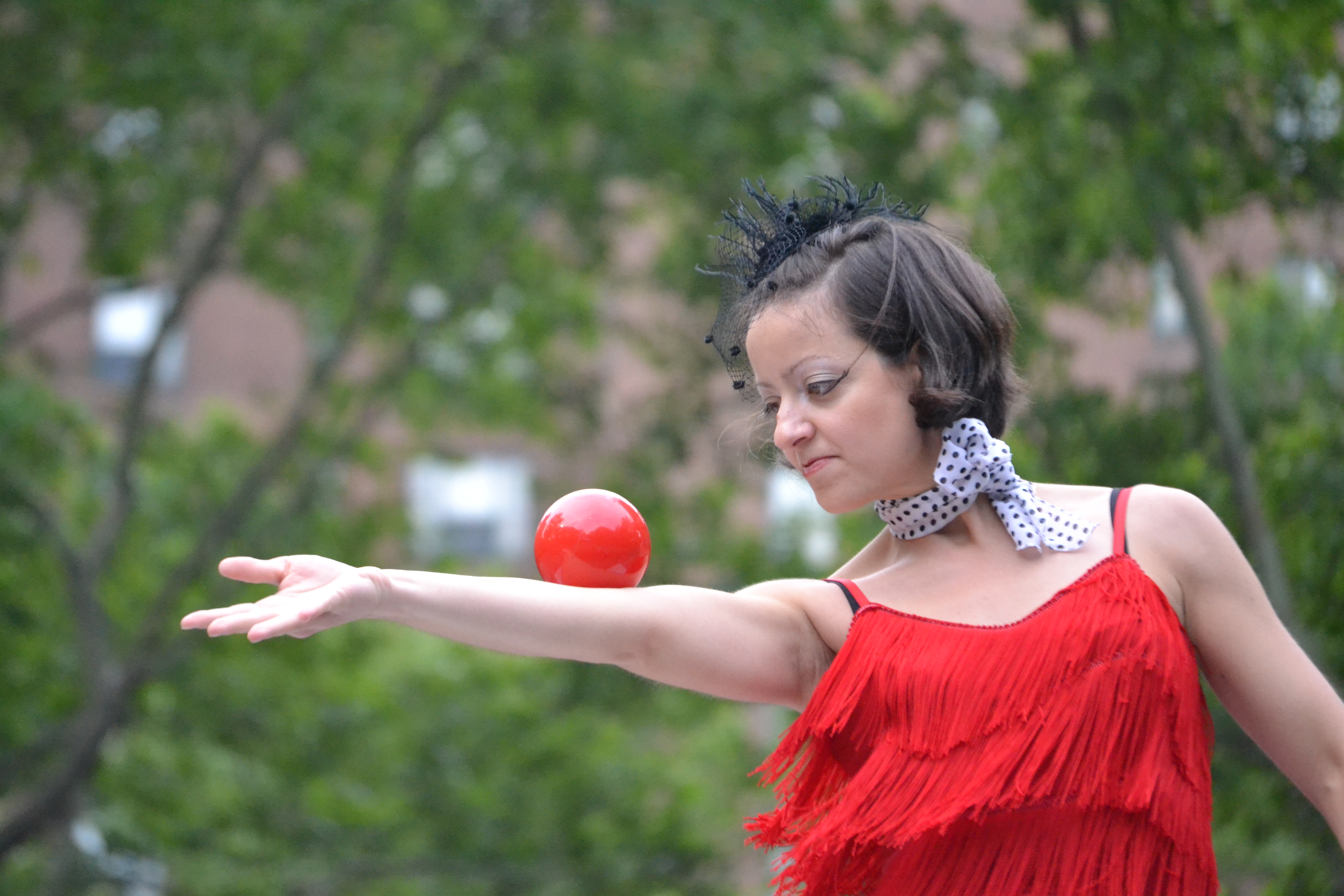
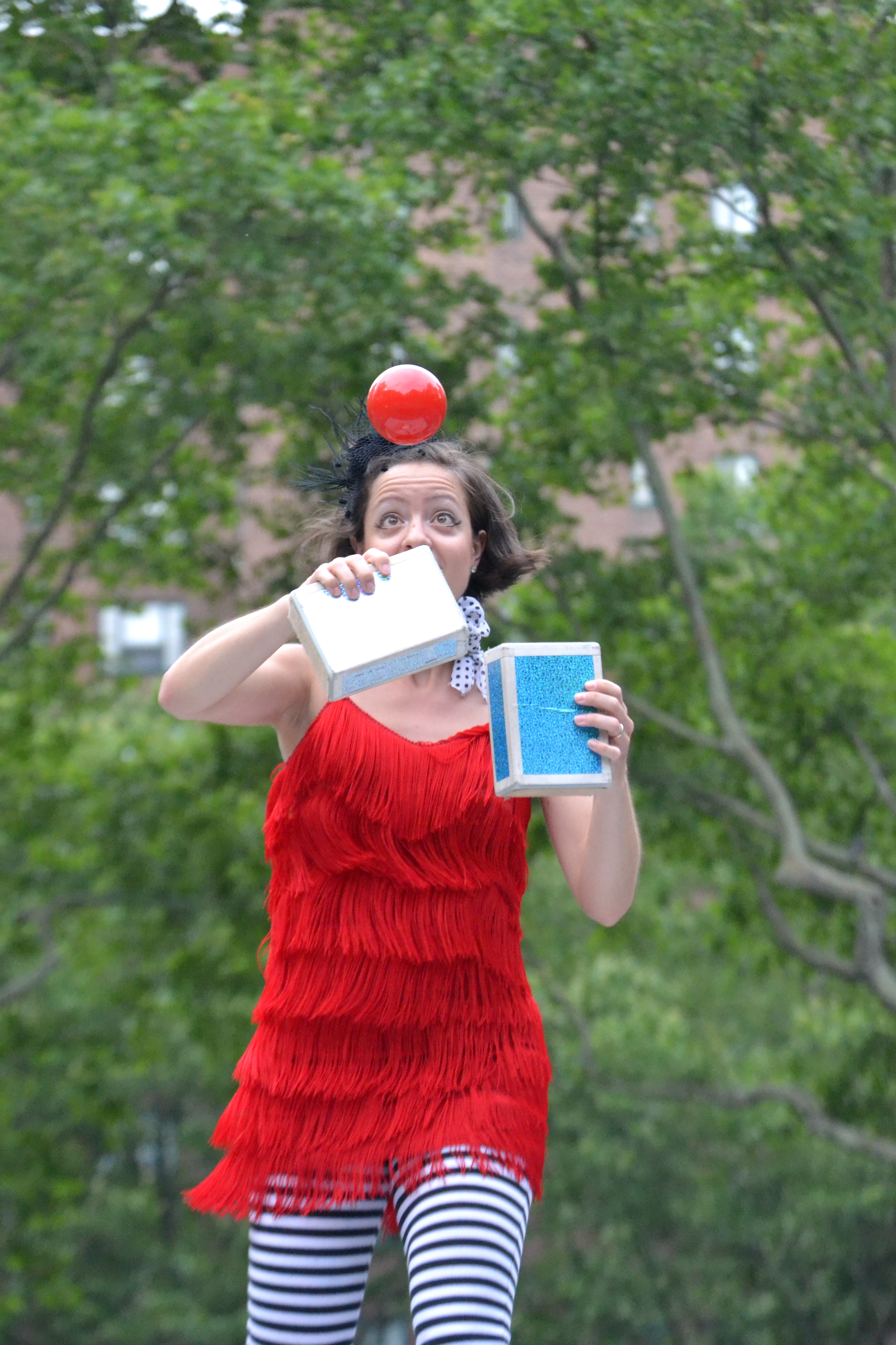
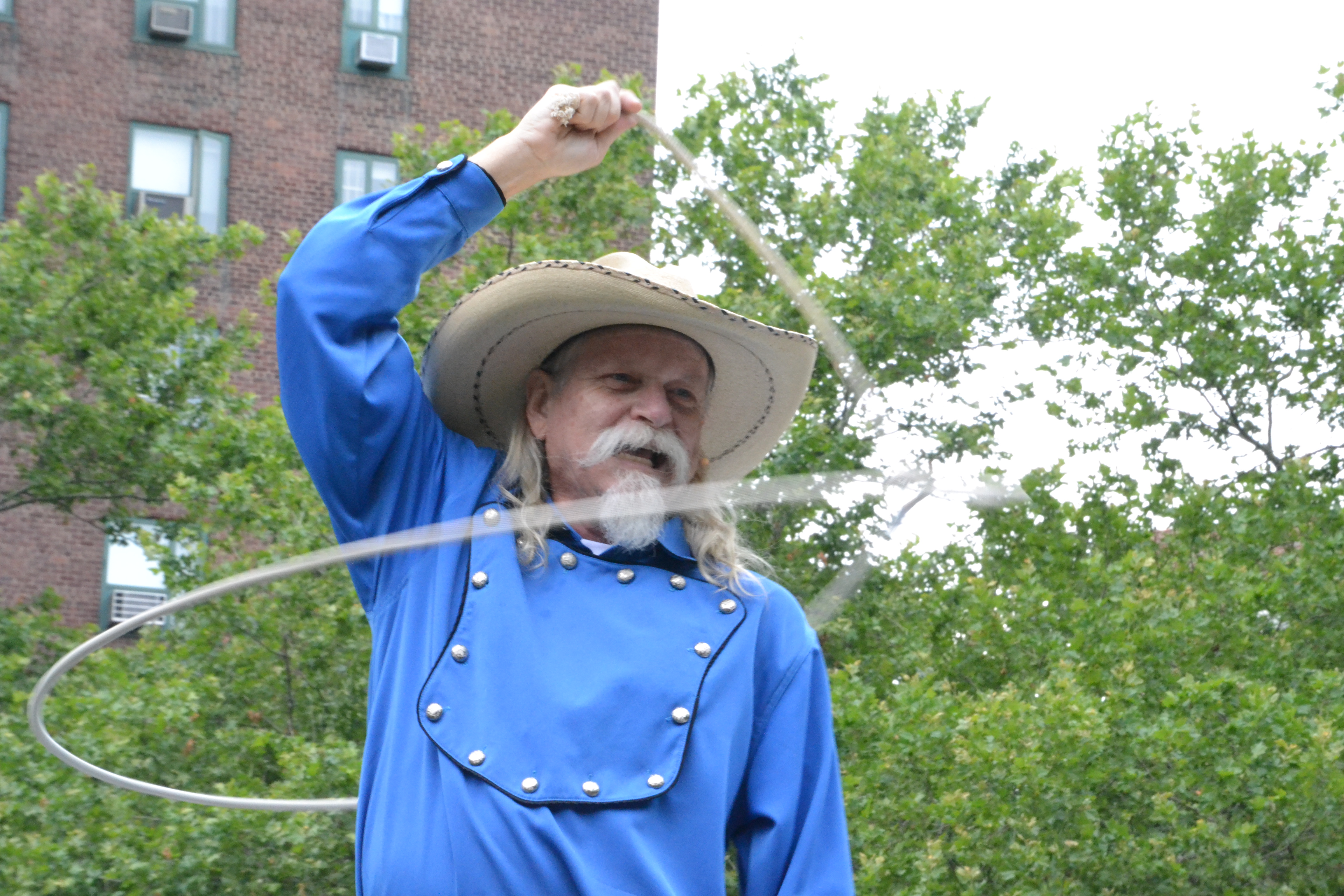
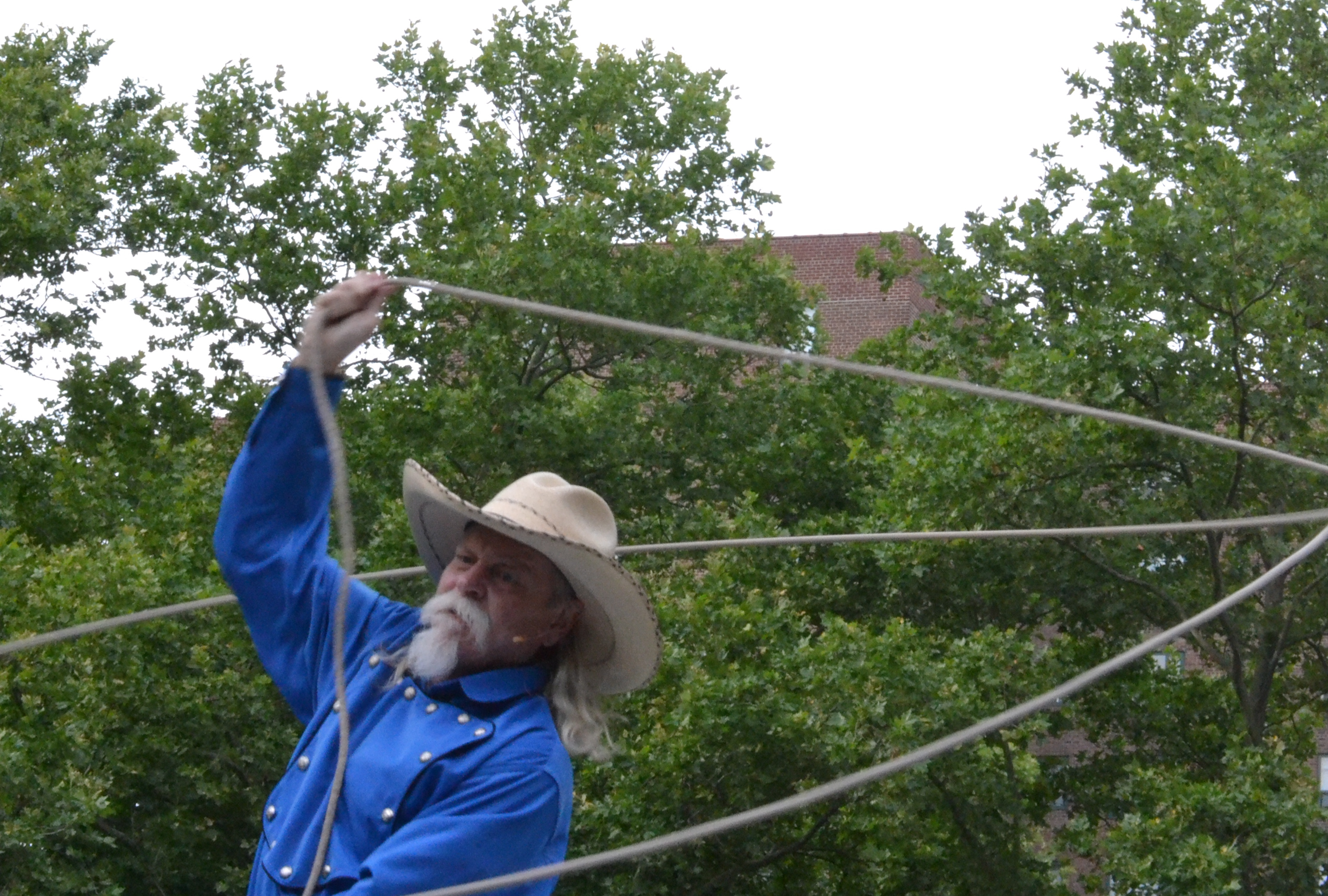
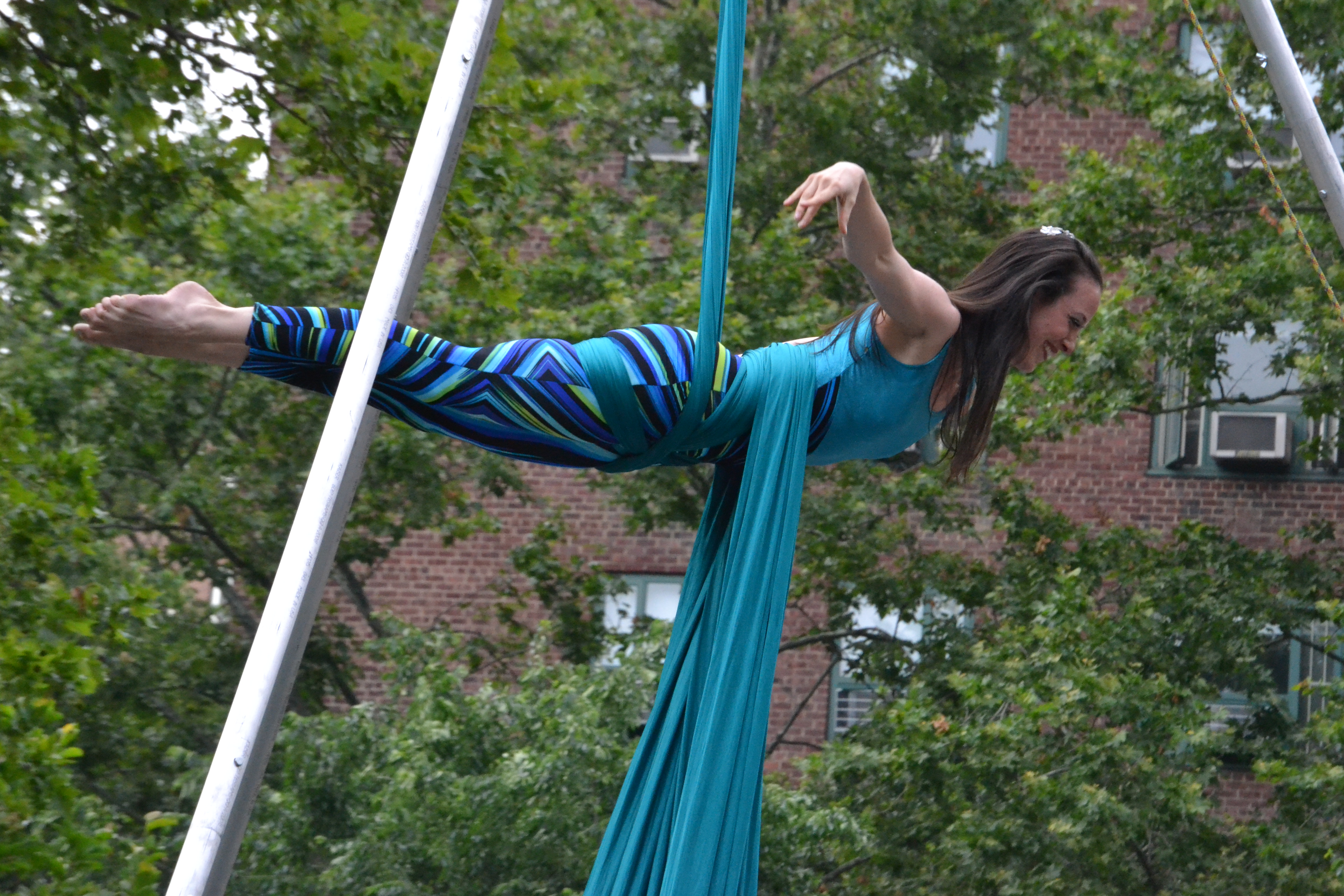
TODAY, while we were watching the free Cirque-tacular spectacle at the Oval, I almost wished I were a kid again. What more could a child ask for? A lawn, lots of playgrounds nearby, building friends, and free stuff in the summer catered to my age group! Like the group of talented contortionists, bull-whip masters, jugglers, clowns, dancers and aerialists who performed at Peter Cooper Village and Stuy Town’s central grassy lawn, the Oval, this evening. I clapped my hands as excitedly as the toddlers crowding the railing.

The contortionist in Act Two

The contortionist in Act Two

The juggler

The juggler

The funny cowboy with the bull whip and the lasso

The funny cowboy with the bull whip and the lasso

This rope was 40 feet long

This rope was 40 feet long

The colorful clown duo

The colorful clown duo

The amazingly talented dancer

The amazingly talented dancer

The graceful and gravity-defying aerialist

The graceful and gravity-defying aerialist

Four on Friday: Cozumel Eats

17 Jun

SINCE this seems to be Cozumel Week on this blog (seriously, Mexico travel and tourism ministry, you think I’m going to get my commission anytime soon?) I am continuing the trend with four great places to eat in Cozumel.

1. Casa Denis: This one tops my list coz it stands the test of time. It was, hand’s down, my best meal during a week of delicious meals in Chichén Itzá, Cozumel and Tulum, and it was my best meal this time around, too. It’s the oldest restaurant on the island (or so they claim) and has old black and white photos displayed on the inside wall. The seating is mainly outdoors; sit on the side of the main square rather than the stuffier back. The servers are jovial, the margaritas huge, and the fresh watermelon juice pure heaven. But the reason you should go there is the food. The fish, like everywhere on the island, is fresh as can be; the preparation, divine. I had red snapper (last time it was grouper) rubbed with lime, garlic, and salt. I can’t think of a simpler seasoning but combined, it made magic in my mouth. I asked our server for the recipe, and this is what he said:

Delicious margarita at Casa Denis

Delicious margarita at Casa Denis

To prepare the garlic, cut it into fine pieces and toss it in olive oil with lime, white wine and jugo de Maggi (Maggi sauce, that you can buy in Cozumel). Once the garlic is ready, marinate the fish with lime, salt, pepper and garlic, and then grill or cook in a pan.

We brought a travel-sized bottle of the Maggie jugo back with us, and I can’t wait to try making the dish myself. But I know it won’t touch what we had at Casa Denis, and I can’t imagine it’ll be too long before we’ll be back there to have the real thing!

132 Calle 1. #987-872-0067

2. Tio José: This little place, which is called “Uncle José” is a humble eatery right by the water, close to the lighthouse. You can get a seat outside on the terrace or on the beach itself. I highly recommend the fish tacos (super simple, with tomatoes and lettuce and pickled onions—oh, those onions! I could write odes to those onions) and the pork tacos and the micheladas—beer mixed with lime, hot sauce, and salt. Best eaten with the sea breeze lightly ruffling your hair. And after you’re done, you can pull on your flippers and snorkel mask and wade into the water, as a number of families were doing when we were there.

One half block east of the intersection of Avenida 65 and Calle 11 on the south side of the street.

Fish tacos at Tio Jose

Fish tacos at Tio Jose

3. Chen Rio: This seaside shack on the eastern side of the island was recommended to us by a local for its excellent seafood. Accessible only through the lone paved road that connects the tourist-stuffed western side—bulging with cruise liners, “flea markets” and high-end jewelery stores—to the calmer, deserted eastern side, Chen Rio was still surprisingly crowded, a testament to how far folks are willing to drive for fresh lobster. If you’re in a group of four, you can get the seafood platter, with fish, shrimp, lobster and conch. Being only two of us, we settled for the shrimp and lobster platter, which was more than enough. There were no fancy sauces or delicate arrangements, just fresh white meat on lettuce and tomato, with a side of fries and four slices of avocado. They provide plenty of salt and wedges of lime; sprinkle liberally and dig in!

The Chen Rio seaside shack

The Chen Rio seaside shack

Our partially devoured lobster and shrimp platter at Chen Rio

Our partially devoured lobster and shrimp platter at Chen Rio

After we were done eating, we queried our waiter about the provenance of the lobster. In answer, he pointed at a fishing boat that was just coming to shore. Off the boat and onto the plates! It doesn’t get any fresher than that.

The other awesome thing about Chen Rio is that, like Tio José, the beach it sits on is perfect for snorkeling or swimming. It’s protected by a ring of rocks that take the ferocity of the waves, leaving the enclosed space gentle and welcoming. To the left is a natural kiddie pool, a high bar of sand that creates a shallow pool, only two or three feet deep, where the tots can splash about in safety.

Costera Este Highway 3.5 miles, north Cozumel 77600.
The back garden at Kinta

The back garden at Kinta

4. Kinta: This is where you want to go for date night in Cozumel. Ask to be seated in the back garden. Artfully placed fronds shield you from your fellow diners; lights shine through stenciled out iguana sculptures clinging to the walls; and the red-and-black color scheme is just plain romantic. They have variations on the standard margarita—hibiscus or jasmine, anyone?—and an innovative, oft-changing menu. It seems to change so often, in fact, that I can’t find the appetizer that I devoured a mere week ago on their website! It was so good that I recommend asking for it by name if it’s not on the current rotation. It’s called the cherry bomb, and it’s four perfectly round balls of fried conch and other stuff that set off fireworks in my mouth. You look at the artful presentation, the mélange of flavors, the bringing together of the familiar and the surprising, and you know that there’s a real chef behind every dish. I won’t recommend other specific dishes, but if you want delicious food in a beautiful setting, you must pay a visit to Kinta.

Av. 5 between Calles 2 and 4, Cozumel, Quintana Roo, 77600. #987-869-0544