Archive | South Asia RSS feed for this section

Indian Diplomat Discusses U.S. Relations, U.N. Security Council

8 Nov
Bibek Maitra, back left, presents to the U.N. with Pramod Mahajan, the deputy leader of the Indian U.N. delegation that recently visited New York.

Bibek Maitra, back left, presents to the U.N. with Pramod Mahajan, the deputy leader of the Indian U.N. delegation that recently visited New York.

AT the age of 25, Bibek Maitra became the youngest private secretary to the Indian Prime Minister in the country’s history. He has a degree in journalism and has written several articles on topics including environmental economics in India, relations between India and Pakistan and the current situation in Palestine. During his recent visit to New York as part of the Indian delegation to the United Nations, Communiqué asked him a few questions.

Q: For some time now, India’s chief demand to the United Nations has been an invitation to join the Security Council as a permanent member. Please comment.

A: Yes, India, with its huge population, should be a permanent member. India and China together make up half of mankind! The world’s power cannot be concentrated in the hands of five countries. Every member has a vote, but the importance of that country differs. India is a country of one billion. Every sixth man in the world is Indian. How can the U.N., which represents the people of the world, not recognize India? How can you compare it with Cote d’Ivoire, with a population of five million, or Holland, with a population of nine million?

Q: What do you think of the U.N. reforms?

A: U.N. reforms are a must. It has become an obsolete body, without teeth. It has to act sagaciously and judiciously, has to streamline itself. Its decisions must be honored, and if they are not, penalties should be instituted. Right now, the preponderance of the discussion is centered around pressure groups. So the Islamic lobby talks about Palestine, but when the genocide in Rwanda happened, the world looked the other way. There is wanton wastage of funds and inefficient decision-making. The U.N. has to be seen as giving justice to member nations, rather than just being a platform for conferences, without the determination to solve the pending problems of the world. If certain topics are too contentious, it should at least try to enact laws about non-controversial subjects, such as the protection of animals, an international protocol on communications and outer space, health. But there’s no alternative to the U.N. And the world needs a platform.

Q: Do you believe that India’s relations with America are improving, especially given the Bush administration’s recent recognition of India as a nuclear power?

A. As a nuclear power, it was a fait accompli, whether the United States. recognized it or not. But yes, relations are changing. America needs us, but we need America too. Where is our money coming from? The information technology (IT) industry. One industry has made India debt-free. We now have the fifth or sixth largest foreign [currency] reserves in the world. And we were given the initial boost by the American information technol- ogy companies [which] raised Indian IT companies at their knee. It all started with job orders from America. And America is India’s biggest trading partner, for imports and exports.

Q: How has India’s relationship with Iran changed due to India’s new friendship with America?

A: Iran is a very sensitive topic. Iran has never hurt us; even during the 1971 war we had no conflicts with Iran. Historically, we’ve had very good relations with the Shah of Iran. Now America has decided to do something with Iran—when and how is conjecture. But India is in a fix. Iran is preparing a nuclear weapon, whatever they might say to the contrary. Just because we’ve had warm relations with Iran doesn’t mean we would welcome the formation of an Islamic nuclear power. It’s still a danger, and the question is, who would have control of the nuclear weapon? There is a lot of pressure from America, who has been twisting our arm and we did vote against them. [In late September, India voted at the International Atomic Enegry Agency to refer Iran to the U.N. Security Council.] But to gain something you have to give up something. To gain America’s friendship, we had to give up Iran’s friendship. Iran is now very aggravated with India. The proposed gas pipeline project [running from Iran through Pakistan to India] is now up in the air.

Q: What do you think about the recent calls for India and Pakistan to come together over the earthquake that affected both countries?

A: Indians didn’t die in the numbers that they did in Pakistan, largely because of good infrastructure. Most of the deaths have been health-related; they have occurred after the earthquake, due to gangrene, or the non-availability of medicine for victims, but not directly because of the earthquake. Pakistan didn’t accept India’s offer of helicopters because there are still remnants of terrorist camps, mujahedeen and Lashkar [Laskhar-e-Taiba, a banned terrorist organization] camps, in the Northwest Frontier Province. Pakistan was scared that India would see those camps and use them as evidence to embarrass Pakistan in the international community.

This article was printed in the fourth edition(PDF) of the student newspaper of the School of International and Public Affairs, Communiqué, in the fall of 2005.

Waste of a Good Idea

7 Jul

THIS post was part of the TimeOut Mumbai cover story of the June 17-30, 2005 edition, “Local Heroes: Small people making a big difference.” See my other post in this story here.

Juhu Beach, Mumbai

For eight years, George Gopali “picked up the broom” and kept Juhu Beach clean. Four years ago, the Brihanmumbai Municipal Corporation decided to replace Gopali’s efforts with beachcombers, or beach cleaning machines. While the machines do help in clearing human-created waste, ecologists complain that they also pick up small crabs and other creatures, disturbing the beach’s eco-system. Gopali describes his experience of working with the BMC, and his disappointment at being dumped at the altar.

“I wanted to do something for the city that has given me so much. My father was a manager in the BMC, so right from when I was a child, he would tell me that BMC employees don’t work because they know they’re going to get paid anyway, but private companies deliver. So I said to myself, when I grow up, I’ll do something different. I saw that we had beautiful beaches, why not keep them clean? It’s easy to complain, but no one wants to pick up a broom. I picked up the broom.

“I have a housekeeping business, George Enterprises, which cleans the premises of building societies. In 1992, I wrote to the municipal commissioner Sharad Kale, who liked my idea of cleaning up the beach. But he said that the BMC could not pay me directly, since the union would have objected. He told me, ‘There are 15 hotels around the beach, they are direct beneficiaries. Speak to them.’ So I asked the hotels to give me one room’s rent per month as payment. This added up to Rs 90,000 a month. Initially, I invested my own money, but two years later, the BMC gave me three hoarding sites, which I rented out to advertisers.

“I used local boys as labour—drug addicts, boys who came to Mumbai to become film stars but slept on the beach, boys from the slums nearby. At first it was a struggle, but the BMC supported me. However, the hotels withdrew from the scheme after four months. Yet, I headed the cleanup for eight years, from 1992-2000. Then, BMC officials started thinking that I was making millions out of the cleanup, so they tendered the process. I got name-fame, so they didn’t want to pay me anymore. They floated a global tender with a minimum deposit of Rs 25 lakh to clean the beach with machines. So only big people with big money could bid for it. Now if I want to bid for a tender, I’d have to invest Rs 50-60 lakh. I’m not going to do that—the BMC are not good paymasters.

“The BMC has been thinking about getting beach-cleaning machines for the past 15 years. After my grand success, they began thinking, why not? I say, why? We have so much labour. Even the sieving of the sand was done with jaalis that we made ourselves. If you have that much money, put it into dustbins, benches and amenities for children and senior citizens! Plus there’s a high level of corrosion in the machines, so they don’t even last.

“We all say, ‘mere Bharat mahaan,” but we Indians are not proud of our country. People spit, the BMC head office stinks. I even sent a proposal to clean the BMC office because it stinks. The Juhu beach cleanup benefited the hoteliers, the public, the kids. One man can make a difference. You just need someone dedicated.”

As told to Jayati Vora

Sweet Smell of Success

7 Jul

THIS post was part of the TimeOut Mumbai cover story of the June 17-30, 2005 edition, “Local Heroes: Small people making a big difference.” See my other post in this story here.

Name: Rahamim Jacob Chariker
Claim to fame: Subedar Road used to be called “Sandas” Road till he came along.

Trash litters the coast of Mumbai

Trash litters the coast of Mumbai

There were mornings when residents of Subedar Road in Worli would hold their noses to avoid inhaling the stench of excreta and garbage rising off the streets. The neighbourhood, a mix of slums, low-income buildings and posh housing, had a clutch of underutilised public toilets, and roads were used as commodes as well as garbage bins.

“The gents and ladies used to perform their morning duties on the road,” said Manohar Gokhale, a long-time Subedar Road resident. “The area was so much-ridden that the municipal corporation had stopped sending their trucks in here.” The stench was derogatorily called “Sandas Road” until four-and-a-half years ago, when Babuji, a former government employee, stepped in, got down on his knees and cleaned shit himself to set an example.

Babuji’s effort is especially commendable given Mumbai’s enormous sanitation crisis. The municipal corporation says that 71 percent of the population has access to sewerage services, but a walk by the city’s coast any morning makes that claim questionable: the rocks are occupied by tens of thousands of people using the beach as their toilet. The city of approximately 13 million people has only 1,300 public toilet blocks. When a senior municipal official spent the day outside a public toilet in Mahalaxmi’s Dhobi Ghat recently, she found that each seat served 917 people—in conditions she described as “stomach-churning.”

A Jew whose children live in Israel, Babuji’s real name is Rahamim Jacob Chariker, and as he is fond of reminding you, his real name has the cadence and magic of Amar Akbar Anthony. Chariker has used his name as a connector to plug into the various communities that live in the neighbourhood—when he meets a Muslim, he calls himself Rahamim, he’s Chariker for the Maharashtrians and Jacob for the Christians. He first decided to act on the stench that hung outside his window when some guests from Israel whom he had invited for dinner reached his building, took one whiff, and rushed back to their hotel.

Chariker hired a bunch of workers to clean up the roads, but when they refused to touch the human waste, he grabbed a shovel and set to work himself. He started persuading the adults through their kids: he would bribe the children to clean up the roads by handing them chocolates and bottles of phenyl. When the parents started quizzing the kids about where they were getting the chocolate from, the line of inquiry led to Babuji. The next step was to start cleaning the garbage. Chariker hired a 25-member team to remove upto 550 loads of garbage, with some help from the BMC’s dumper trucks. Over time, he has also managed to persuade the residents to start using the toilets and stop defecating on the streets.

Chariker claims to have planted close to 90,000 plants and trees in the 10-km radius from his home, using money sent to him from Israel. Today, the area bears no trace of its earlier, stinky avatar. Subedar Road is clean and is lined with trees bearing bananas, cherries, coconuts, sugarcane, mangoes, badams, tomatoes and Ayurvedic plants. “I bought whatever looked good,” Chariker said. He sends fruits from the trees to officials in the municipality. “They say, ‘It’s difficult to get fruit to grow even in an orchard, but you manage to coax them out of the footpath.”

Mortality Combat

8 Jun

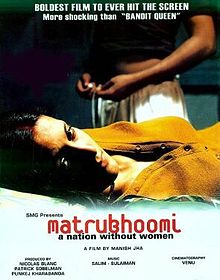
MANISH Jha first imagined a world without women after he read a report about a village in Gujarat that was inhabited only by men—the result of unchecked female infanticide. He later found a Ministry of Health and Family Welfare report estimating that 35 million females have been killed at birth or in infancy over the past century. “We talk about the decreasing tiger population, but what about the disappearance of 35 million women?” asks the 26-year-old filmmaker. His agitation fuelled his creativity. Soon after, Jha wrote the script that has become the acclaimed film Matrubhoomi: A Nation Without Women.

The film, which Jha also directed, has received a mantleful of awards at film festivals, including the International Critics’ Prize in Venice. Two years after the film was completed, it is finally being released in India—though after several censor’s cuts.

The film is set in a futuristic rural Bihar, where decades of killing female babies by drowning them in cauldrons of milk have eliminated women from the population. In the woman-less village depicted in the film, men copulate with cows and the elders cry in nostalgia as they watch women in pornographic films. When a 16-year-old girl, Kalki, is discovered, she is married off to five brothers, each of whom claims her for one night a week (their father gets the remaining two nights).

The allusion to Draupadi’s character in the Mahabharata epic is clear, but Jha is more inspired by fact than by myth. He was made acutely aware of the cruel treatment of women when he was eight. A woman in his native village Dhamaura had been burnt by her husband because she didn’t bring in enough dowry. “I saw her lying on the ground, her body covered in 90 percent burns, completely naked because her clothes had been burnt,” Jha remembers.

After he graduated with a degree in English literature three years ago, Jha came to Mumbai, but found that the big city wasn’t any more large-hearted to women, especially homeless women. His five-minute short film on homeless women, A Very Very Silent Film, was widely acclaimed at international festivals, and scooped up the jury prize at Cannes in 2002, prompting two French producers to commission him to direct a film. The script for Matrubhoomi emerged in one breathless week while working as a chef in Iceland. In that country to work as an assistant director on a film that never materialised, Jha had to earn his keep. Back in India, Matrubhoomi was wrapped up in a 28-day shoot.

“What attracted me was the script,” says Punkej Kharabanda, co-producer of the film (along with the French company Ex-Nihilo). “It was brilliant: you could visualise the entire film.”

Early responses to the film have included revulsion at the repeated depictions of sexual violence used in the film and criticism of the character Kalki, who, never even once, attempts to challenge her fate (see review). Jha retorts: “There’s a scene after Kalki’s marriage where you see two rifles in the room. Critics say, why doesn’t she just lift the rifles and shoot everyone? But realistically, what’s a woman going to do? If she’s thrown into a jungle of men, she can kill one, she can kill two, but there’s a larger world of hungry men outside.” But the film also has its share of converts. “A rich businessman who saw the film told me, ‘I hate myself. My wife is pregnant and two days ago I went to the temple to pray for a baby boy.’ It made him question his thought process,” Jha says. “You can love Matrubhoomi or hate it, but you can’t ignore it or the issues it raises.”

This article originally appeared in the June 3-16 2005 edition of TimeOut Mumbai.