Archive | South Asia RSS feed for this section

Copycat: Copy Editing Because No One Else Will

28 Jun
Copycat

Copycat

HAS anyone else looked at articles in the South Asian press and wondered why no one caught all those typos, formatting errors, and just plain bad English that seems to afflict so many of them? Not to mention shoddy reporting and badly written prose. Surely there are copy editors loitering around newspaper offices, with red pencil in hand, just waiting for an incorrect spelling or a dangling clause to put to rights? An editor somewhere who recognizes that sentences must have verbs and to send the writer in question back to the computer to fill in the blanks? How do they sleep at night, these sub-editors/copy-editors, proofreaders and editors, seeing the most basic rules of grammar violated in so many (albeit sometimes imaginative) ways? Somewhere, the souls of Strunk & White are shriveling up in horror that unedited, illiterate reams of newsprint are making their way onto breakfast tables and iPad screens in various parts of the Indian subcontinent. (Or maybe not.)

Since there seems to be a vacancy for a decent editor, I have decided to fill it. Thus, every so often, when I come across something particularly illiterate—or when you, dear reader, send me something you would like to see the way it was meant to be written—I will whip out my red pencil and attempt to cross, correct and craft the offending article into shape. (As one unnamed South Asian author said, “Nerd Heaven!”)

Here’s my first attempt. Just for shock value, take a look at the article as was originally written. Did you sigh in exasperated recognition? Then read on for my edits (additions in caps and sometimes in bold):

Fitness firm sacks rape victim after FIR

NEW DELHI: YESTERDAY/INSERT DATE A 24-year-old woman, who works as a physical trainer AT TKTKTK, has alleged that she was raped twice in the changing room of a gym at the Delhi Development Authority sports complex in Sector 11, Dwarka, first by the manager and then by another trainer.

Both the accused, [[WHO ARE THESE NAMELESS ACCUSED? INSERT NAMES AND AGES HERE]], WHO ARE FROM Meerut, BUT currently LIVE in west Delhi, have been remanded to 14 days’ judicial custody. THEY WERE ARRESTED ON [[INSERT DATE HERE]].

Shockingly, the victim WAS FIRED by [[INSERT NAME OF HER EMPLOYER HERE]], the private fitness training company WHERE SHE WORKS, after the incidents [[OR THE POLICE COMPLAINT?]], along with the accused, [[WHO ALSO WORKED THERE?]].

GET QUOTE FROM THE COMPANY HERE ABOUT WHY THEY FIRED THE VICTIM AND THE ACCUSED. GET QUOTES FROM THE VICTIM’S FAMILY IF POSSIBLE.

ALSO GET A QUOTE FROM THE DELHI DEVELOPMENT AUTHORITY ON THE SAFETY OF THEIR SPORTS COMPLEXES AND FROM A GYM MEMBER WHO USES THAT PARTICULAR COMPLEX, AND PERHAPS A FELLOW TRAINER, ON WHETHER OR NOT THEY FEEL SAFE WORKING OUT THERE.

The woman, a resident of Mangolpuri [[IN TIMBUKTU? OR A NEIGHBOURHOOD OF DELHI?]], is separated from her husband and has filed for divorce [[HOW ARE THESE DETAILS RELEVANT? THEY IMPLY THAT HER MARITAL STATUS HAS SOMETHING TO DO WITH HER ASSAULTS. CUT]]. Sources [[WHO ARE THESE MYSTERIOUS SOURCES? GIVE US SOME NAMES PLEASE]] claimed she landed [[USE ANOTHER WORD—TOO COLLOQUIAL]] the job through a friend, another gym trainer AT [[INSERT NAME OF EMPLOYER HERE]] who was a friend of Ajay [[INSERT LAST NAME HERE]], one of the accused.

The police [[WHO FROM THE POLICE? USE THE PERSON’S NAME HERE AND INCLUDE HIS OR HER JOB TITLE AND RANK]] said the woman was transferred from the Paschim Vihar branch of the fitness centre TO THE DWARKA BRANCH on June 15 to undergo training as an instructor, [[BECAUSE….?]]. According to THE POLICE complaint SHE FILED, ON JUNE 19, Ajay [[INSERT LAST NAME HERE]], A TRAINER AT THE PASCHIM VIHAR SPORTS COMPLEX, approached her around 11 am on June 19 with a white powder after she had complained of a headache. [[ADD DETAILS—WHAT DID AJAY SAY THE WHITE POWDER WAS?]] The victim reportedly felt dizzy after having the powder [[IN A GLASS OF WATER? INHALING IT LIKE COCAINE?]] and went to THE changing room [[WAS IT A WOMEN’S CHANGING ROOM? A UNISEX ONE? WAS IT EMPTY?]] to sit DOWN. The accused followed her there and raped her. [[DID SHE SCREAM? WHY DID NO ONE HEAR HER? IF THE ASSAULT TOOK PLACE IN THE MORNING, SURELY THERE WAS SOMEONE AROUND WHO WOULD HAVE HEARD. CANVAS THE GYM TO SEE IF THERE WERE ANY OTHER STAFFERS OR GYM MEMBERS AROUND; PERHAPS A JANITOR HEARD? AND THEN WHEN DID THE MANAGER OF THE COMPLEX RAPE HER? HOW IS HE INVOLVED? HOW DID SHE LEAVE AFTER THE ASSAULT OR ASSAULTS? WAS SHE THREATENED TO KEEP QUIET OR WAS SHE ALLOWED TO LEAVE?]]

“The victim said out of fear she did not tell anyone about the attack,” claimed one of her acquaintances [[WHO IS THIS ACQUAINTANCE? WHAT WAS SHE SCARED OF? AND THEN WHAT PROMPTED HER TO COME FORWARD AND FILE A COMPLAINT? DID SOMETHING HAPPEN TO MAKE HER STOP BEING AFRAID?]].

According to the complaint, the victim’s mother was threatened by the accused and her boyfriend beaten up when they came to the DDA complex [[THESE DETAILS NEED MORE EXPLANATION—WHEN DID THEY COME TO THE SPORTS COMPLEX? DID SHE ASK THEM TO FETCH HER AFTER SHE WAS ATTACKED? IS THIS ON JUNE 19 OR ANOTHER DATE? WHO THREATENED THE MOTHER? WHO BEAT UP THE BOYFRIEND? WHAT ARE THE NAMES OF THE MOTHER AND BOYFRIEND? TRY TO GET A QUOTE FROM THEM]]. The boyfriend was taken to Deen Dayal Upadhyay Hospital [[THE CLOSEST HOSPITAL, PERHAPS?)]] for treatment [[FOR WHAT? A SPLIT LIP? SOMETHING MORE SERIOUS?]] after which an FIR [[A FIRST INFORMATION REPORT]] was registered [[BY THE BOYFRIEND? PLEASE DON’T LEAVE US IN SUSPENSE!]].

“After getting the medical report of the victim, the police filed an FIR of rape against the duo and they were arrested,” said the police official [[WHICH POLICE OFFICIAL? NAME, JOB TITLE AND RANK HERE PLEASE]].

According to the DDA officials, the contract for maintaining and running the gym had been awarded to Himanshu Bhardwaj, director of SAB fitness and training centre [[THIS INFORMATION NEEDS TO COME HIGHER UP. ALSO WE NEED MORE INFORMATION ABOUT SAB FITNESS—FOR INSTANCE, ON THEIR WEBSITE THEY ADVERTISE THEIR SERVICES TO RUN GYMS OWNED BY OTHERS. HOW MANY SUCH ARRANGEMENTS DO THEY HAVE? WHO’S LIABLE IF SOMETHING HAPPENS AT ONE OF THESE LOCATIONS? HAVE THEY EVER FACED COMPLAINTS BEFORE OF INAPPROPRIATE BEHAVIOUR? WHAT KIND OF SCREENING PROCESS DO PHYSICAL TRAINERS GO THROUGH BEFORE THEY ARE HIRED? HOW MANY TRAINERS DO THEY HIRE? WHAT’S THE RATIO OF MEN TO WOMEN? ETC]]. The accused and the victim were employees of this fitness center.

“I don’t know if these allegations are true but the contradictory statements given by the woman indicate that the trainer is being framed. I don’t want to comment further as the matter is under investigation,” Bhardwaj said. [[DON’T LET HIM GET AWAY WITH A STATEMENT LIKE THAT—WHAT ARE THE “CONTRADICTORY STATEMENTS”? I DON’T SEE ANY CONTRADICTORY STATEMENTS SO FAR—ONLY INCOMPLETE ONES. WHY WOULD THE TRAINER BE FRAMED? ALSO, YOU GET THIS QUOTE FROM HIM WHICH EXPRESSES HIS DISBELIEF THAT HIS TRAINER’S ACCUSATIONS ARE FALSE, BUT DON’T QUESTION HIM ON WHY SHE WAS FIRED?]]

He said the victim HAS BEEN EMPLOYED for the past six months, while the accused were working for him for around a year.

NOTES: THE ONLY QUOTES IN THIS STORY ARE FROM AN UNNAMED POLICE OFFICIAL, AN UNNAMED SOURCE WHO COMMENTS ON THE VICTIM’S STATE OF MIND, AND THE EMPLOYER WHO FIRED THE VICTIM AND THE ACCUSED. NO QUOTES FROM THE VICTIM OR SOMEONE FROM THE VICTIM’S FAMILY, NO IDENTIFIED FRIENDS OR FAMILY, NO QUOTES FROM A WOMEN’S ORGANIZATION/RAPE SHELTER, OR A LAWYER, OR A UNION REP, ON WHETHER HER FIRING WAS EVEN CONSTITUTIONAL.


No offense to the writers and editors at the fine publication where this article originally appeared—my aim with the Copycat post (this is the first one but hopefully there will be more to come) is to make a virtual contribution to journalism in the region where I first learned to write and edit, not to single out any particular person or paper.

And if you come across any articles that are begging for the Copycat treatment, do send them my way via the comments section below or through the Contact form.


Four on Friday: The India Files

24 Jun

FOUR tidbits from the homeland this week.

1. Coke Studio has come to India! For those of you new to Coke Studio, it began in Pakistan four years ago, as a television show sponsored by Coca-Cola featuring live music and collaborations between Pakistani folk, eastern, classical, and contemporary musicians. It has become a runaway hit, and there is nothing quite like it in the region.

From the melodies in Pashto and Dari to the pop compositions of Strings and Ali Zafar, from the sweet voices of Zeb and Haniya to the gravelly Garaj Baras rendition by Ali Azmat and Rahat Fateh Ali Khan and the irresistibly foot-tapping Chambey di Booti (Jugni) by Arif Lohar and Meesha Shafi, Coke Studio Pakistan enchants and delights. It doesn’t matter that you don’t know what the lyrics mean or what that instrument is called, it draws you in and doesn’t let you go.

Noori in Coke Studio Pakistan

Noori in Coke Studio Pakistan

In a behind-the-scenes Newsline interview, Coke Studio Pakistan’s producer, Rohail Hyatt talks about the show’s beginnings and what he hopes to achieve with it. Hyatt laments the fading out of traditional music and said he hopes the music show will provide a new platform for dying musical languages. He adds that Coke Studio isn’t “a commercial platform, it’s become commercial because people have liked it, but it was never meant to be. We have never succumbed to the pressures like, ‘Oh God, there are so many fans now that we have to cater to the public taste.’ In fact, it’s even more experimental this time.”

Asked about Coca-Cola taking the show to India, Hyatt is hopeful. “From what I am seeing and hearing, India is also trying to reinvent itself. Trying to totally steer away from Bollywood. Just look at the palette they have in terms of raw talent. Music is part of their philosophy. With a palette like that, you could paint a very interesting picture.”

It’s true that Indian radio stations play Bollywood beats obsessively, and it’s only in recent years that non-movie songs by Rabbi Shergill, Kailash Kher and others have made it to FM. As composer-singer Shankar Mahadevan—who featured in the first episode—told NDTV, “Bollywood is huge, I admit, but isn’t our country huge too?”

As someone who only discovered Coke Studio earlier this year, I didn’t have quite as long to wait for Coca-Cola to bring their venture to India. Perhaps that’s why I don’t share the skepticism of long-time fans when Coke Studio India, officially known as Coke Studio@MTV, debuted in India last Friday at 7 p.m. on the popular music channel. The blog Kafila pronounced, “The unanimous verdict is that Coke Studio India (first aired on the Friday that went by) is no match for Coke Studio Pakistan.”

But Coke Studio Pakistan is mature, and in its fourth season, having produced more than 80 songs; Coke Studio@MTV is six tunes old—an infant in comparison. It’s true, the Indian show could lose the flashing strobe lights and nightclub-like atmosphere, and there’s a lot out there apart from drums and catchy beats, but I for one enjoyed the debut and am looking forward to more. (Watch the first six episodes here.)

The second show is tonight. I, for one, am holding back on the criticism and am cheering with all my might. As much as MTV channel head Aditya Swamy says, “We are not at all worried about TRPs. All we want is to promote pure music [and] youngsters to enjoy the sound of various regions of India,” I am in no hurry to lose a genuine attempt to foster dialogue between India’s diverse musicians to low ratings and an indifferent audience.

Upma as prepared by Top Chef winner Floyd Cardoz

Upma as prepared by Top Chef winner Floyd Cardoz

2. Speaking of success stories, I was buoyed to learn of Indian chef Floyd Cardoz taking home the top prize in the 2011 season of the reality show Top Chef Masters. Top Chef—my favorite cooking show—is a competition among chefs featuring unusual challenges. Past episodes have featured cook-outs on the beach, with the chefs catching the seafood they will serve; cooking with no utensils; cooking with whatever ingredients are on board a ferry; cooking meals reminiscent of their childhoods; cooking healthy versions of the favorite meals of contestants on The Biggest Loser, a weight-loss reality show; creating their own restaurants; and more.

Fellow Mumbaikar Floyd Cardoz won for his preparation of the South Indian upma (as part of a three-course meal that also included a rice-crusted snapper in fennel-laced broth and a reinterpreted version of a beef stew called rendang). Not my first choice at an Udipi restaurant, but still so exciting! Cardoz’s $100,000 grand prize will be donated to the Young Scientist Cancer Research Fund in memory of his father, who died of cancer. After his win, Cardoz tweeted, “Woke up with a hangover. that’s what a magnum of Dom does to you when you celebrate a #TopChefMasters win. I welcome this headache anytime.”

Cardoz, recently of the Indo-French restaurant Tabla, which shut its doors last December, is the new chef of the forthcoming Danny Meyer seafood restaurant in Battery Park, North End Grill. Am looking forward to trying it out!

Meanwhile, here’s his recipe for upma if Top Chef inspired you to give it a try:

Wild Mushroom Upma Polenta with Kokum & Coconut Milk

Four servings

Ingredients

2 cups cream of wheat
3 tablespoons canola oil
1 teaspoon mustard seeds
1 teaspoon cumin
4 tablespoons butter
2 tablespoons shallots
1 tablespoon ginger
1 tablespoon chillies
3 cups chicken stock
3 cups coconut milk
Salt and pepper, to taste
Cilantro, as garnish
Pea shoots, as garnish
Mushrooms
3 tablespoons canola oil
1/2 cup oyster mushrooms
1/2 cup Maitake
1/2 cup king oyster mushrooms
2 shallots
1 chilli pepper
1 knob ginger
Salt and pepper, to taste
2 tablespoons butter
1/4 cup white port
1 tablespoons cilantro, chopped

Directions
1. Heat oil and cream of wheat and toast for 10 minutes on low heat. Remove from pan
2. Heat oil mixture then add mustard seeds and whisk until seeds pop. Add cumin and reserve
3. Heat pan. Add spice oil and butter. Add shallots, ginger, chillies, and cook for 2-4 minutes. Add cream of wheat and cook for 3-4 minutes. Add stock and coconut milk. Mix and cook. Simmer
4. Should be smooth.

Directions for mushrooms
1. Heat oil in sauté pan. Add mushrooms and cook with lightly coloured sear
2. Add butter, shallots, ginger and chilli
3. Deglaze with white port
4. Season with salt and pepper and cilantro.

3. You’ve probably heard of “coyotes” who bring Mexican undocumented immigrants across the border to the United States for hefty sums; in India, the coyotes are called “linemen” and they’re not much different. So says Scott Carney in the new issue of Foreign Policy, in his excellent story, “Fortress India.” In it, Carney describes a “Berlin Wall” that is being constructed by India on its border with Bangladesh, to keep its northern neighbors out. The wall has been in existence since the late 1980s, and is close to completion—the final section will be completed in 2012.

Shockingly—or perhaps, not so shockingly—the Indian Border Security Force guarding the wall has notched up nearly 1,000 killings since 2000, roughly two per week. Carney writes:

In India, the 25-year-old border fence — finally expected to be completed next year at a cost of $1.2 billion — is celebrated as a panacea for a whole range of national neuroses: Islamist terrorism, illegal immigrants stealing Indian jobs, the refugee crisis that could ensue should a climate catastrophe ravage South Asia. But for Bangladeshis, the fence has come to embody the irrational fears of a neighbor that is jealously guarding its newfound wealth even as their own country remains mired in poverty. The barrier is a physical reminder of just how much has come between two once-friendly countries with a common history and culture — and how much blood one side is willing to shed to keep them apart.

And with climate change wreaking havoc on ecologically sensitive Bangladesh, things are expected to get a lot worse.

Situated on a delta and crisscrossed by 54 swollen rivers, Bangladesh factors prominently in nearly every worst-case climate-change scenario. The 1-meter sea-level rise predicted by some widely used scientific models would submerge almost 20 percent of the country. The slow creep of seawater into Bangladesh’s rivers caused by global-warming-induced flooding, upriver dams in India, and reduced glacial melt from the Himalayas is already turning much of the country’s fertile land into saline desert, upending its precarious agricultural economy. Studies commissioned by the U.S. Defense Department and almost a dozen other security agencies warn that if Bangladesh is hit by the kind of Hurricane Katrina-grade storm that climate change is likely to make more frequent, it would be a “threat multiplier,” sending ripples of instability across the globe: new opportunities for terrorist networks, conflicts over basic human essentials like access to food and water, and of course millions of refugees. And it’s no secret where the uprooted Bangladeshis would go first. Bangladesh shares a border with only two countries: the democratic republic of India and the military dictatorship of Burma. Which would you choose?

The migrants will continue to come, and many will die—unnecessarily—at the hands of trigger-happy soldiers. Since liberalization of its economy in the 1990s, India has been keen to imitate the United States’ worst habits: McDonald’s; privatization to the detriment of the population; the workings of its newspaper industry, now foundering badly. In this, too, the U.S. example has not been a successful one. Criminalizing immigrants, erecting fences, xenophobic attitudes: none of this has worked. It’s time to find another path.

The Beautiful and the Damned by Siddhartha Deb

The Beautiful and the Damned by Siddhartha Deb

4. Finally, we are seeing India’s new Internet laws in motion, in the recent lawsuit for “grave harassment and injury” that businessman and Bollywood dabbler Arindam Chaudhuri has launched against journalist Siddhartha Deb, the publishers of The Caravan, which published Deb’s profile of Chaudhuri, Penguin, which is publishing Deb’s forthcoming book, The Beautiful and the Damned, of which the Chaudhuri chapter forms a part, and, bizarrely, Google India.

Check out my previous post about the broad, vaguely worded and regressive new law. I hope to write more on this issue later, so I will keep it short here. Please do read Deb’s profile of Chaudhuri: it’s exceedingly well-written, incisive and even-handed (apologies for the formatting; The Caravan was forced to remove the article from their website by the Assam court, where the suit was filed), and Chaudhuri’s fulminating rebuttal—where he praises the new Internet rules, and which was published in a magazine that he owns—here. The Caravan promises to keep readers updated on the progress of the case. In their editorial on the issue, they say that they intend to “fight this suit because we believe that we must defend the right of journalists to report on controversial subjects or persons without undue fear of legal intimidation from powerful entities or organisations that seek to insulate themselves from criticism.” Amen.

Four on Friday: The Men Choose

3 Jun

SO this week I was wondering what I’d do my weekly four-things-I-want-to-share-with-the-world post about, and the answer landed in my inbox. (Actually, it pinged me via Facebook, but inbox sounds better.) A friend—a male friend—sent me something (that has by now no doubt made its way around the world a couple dozen times) and said he thought I’d like to see it. The following day, another friend, also a guy, found me on Gmail chat and sent me a link to a podcast he thought I should write about on this blog. The men in my life seemed to be choosing this moment (well, three out of four of them anyway) to tell me about cool/interesting/weird things they wanted me to know about, so why not take advantage of it? So here’s my first reader-generated blog post.

1. If I were to start in strictly chronological order, this would have to go first. My friend Hasnain emailed me an article more than a month ago and I meant to write about it then (and I have the draft to prove it) but somehow it never got written. (A weekend trip to the Catskills may have gotten in the way.) It came back into my life through this fresh BBC post. From my incomplete draft:

April has not been a good month to be a blogger in India [May wasn’t much better and June is not looking so good either]. On April 11, the Department of Information Technology greatly tightened the rules governing Internet speech laws in the country, adding many broad and vaguely defined instances in which the government could shut down your website. A few days later, the U.S.-based watchdog organization Freedom House released its report on Freedom on the Net in India, and we didn’t do so well. Though India has no substantial political censorship, according to the report, bloggers and online users have been arrested in the past year, and our press freedom status is only “partly free.”

Many of the new “rules” stand out. Amongst the tidbits of personal information that can be collected from you, the Internet user, are  “physical, physiological and mental health condition,” and, most bewilderingly, “sexual orientation.” Seriously? It’s not clear whether giving out this information is mandatory or not, but given that it can be handed over to the government for a number of reasons, it’s troubling, at best.

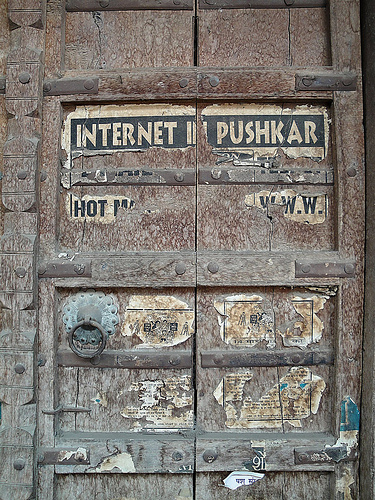
Canadian media artist runran, who took this photograph, says that Internet speeds in Pushkar, India, are akin to paint drying

Canadian media artist runran, who took this photograph, says that Internet speeds in Pushkar, India, are akin to paint drying

Even more disturbing is this rule, which prohibits Internet users from displaying or hosting information that “is grossly harmful, harassing, blasphemous, defamatory, obscene, pornographic, paedophilic, libellous, invasive of another’s privacy, hateful, or racially, ethnically objectionable, disparaging, relating or encouraging money laundering or gambling, or otherwise unlawful in any manner whatever; harm[s] minors in any way” or “threatens the unity, integrity, defence, security or sovereignty of India, friendly relations with foreign states, or or public order or causes incitement to the commission of any cognisable offence or prevents investigation of any offence or is insulting any other nation.”

From the BBC post:

The onus on host websites to remove objectionable content is a cause for concern to Mahesh Murthy who runs Pinstorm, a digital marketing agency in Mumbai which manages clients’ online brand presence.

“Any individual can write to us and say that piece of content offends us and without any recourse we have to take it down,” he says.

“This gives us an extremely onerous responsibility to be able to police every bit of content before it goes out,” adds Mr Murthy.

The new guidelines are, in part, a response to the 2008 terrorist attacks in Mumbai, planned with the help of cell phones and anonymous email addresses. And other governments have similarly restrictive rules. But India’s record in using vague laws to go after its political opponents is not reassuring anyone.

2. The Facebook pinger, my friend Zed, sent me this Guardian article with British author V.S. Naipaul’s inflammatory remarks. In an interview with the Royal Geographic Society this week, he claimed that he considers no female writer his match. You’ve no doubt read or heard of this piece, which has been causing so much furor in the UK and here in the United States, already, but here are some choice bits:

In an interview at the Royal Geographic Society on Tuesday about his career, Naipaul, who has been described as the “greatest living writer of English prose”, was asked if he considered any woman writer his literary match. He replied: “I don’t think so.” Of [Jane] Austen he said he “couldn’t possibly share her sentimental ambitions, her sentimental sense of the world”.

And also:

The author, who was born in Trinidad, said this was because of women’s “sentimentality, the narrow view of the world”. “And inevitably for a woman, she is not a complete master of a house, so that comes over in her writing too,” he said.

But the part that spawned a mini-series of follow-ups was his claim to be able to tell work written by a man as opposed to a woman from a short sample:

He said: “I read a piece of writing and within a paragraph or two I know whether it is by a woman or not. I think [it is] unequal to me.”

A Visit from the Goon Squad by Jennifer Egan

A Visit from the Goon Squad by Jennifer Egan

The Guardian humorously decided to query its readers to find out who among us can claim the same perspicacity as the Nobel Laureate with their “Naipaul test.” (Through sheer guesswork, I scored five out of 10.) The UK’s Telegraph also devised a similar test, though with five samples only. (In that one, I only guessed one correctly, and ironically, I guessed that the excerpt by Naipaul himself had been written by a woman. Wonder what Naipaul would make of that.)

Naipaul has been given enough publicity in the past week, what with his reconciliation—after a period of 15 years—with Paul Theroux over the weekend, and now this. This Wall Street Journal blog had the right idea, when it published an interview with Jennifer Egan, the 2011 winner of the Pulitzer Prize for her novel A Visit from the Goon Squad (which, coincidentally, I just finished reading this past weekend), in which she said:

He may feel like he’s dealt a difficult and painful blow to women, but he makes himself look silly and outdated. And honestly, pretty vain.

Read this 1998 interview Naipaul gave to The New Yorker for an insightful portrait of the author.

UPDATE: I just came across this piece in the Indian newspaper Mint (where I’ve published several travelogues over the years) by Supriya Nair, which impressed me so much that I’m tempted to quote it in full. But that’s bad blogger etiquette, so here are the bits I liked best:

[Y]ou’ve probably seen these charts that came out earlier this year, which ran some numbers on how many women writers were reviewed in America’s top literary magazines — and how many women reviewers wrote for these publications. In some of the Anglophone world’s most liberal, forward-thinking — indeed, downright groundbreaking — publications, the imbalance on these counts isn’t small. In fact, it’s shocking.

Go look at those charts again. I’ll wait.

So, as you can see, women writers have bigger things to worry about other than VS Naipaul not liking their feminine sensibilities. (I mean, what next? Gay writers too caught up in unimportant things like sexuality? Japanese writers write too much about Japan? Derek Walcott just not understanding the West Indies? I’m agog, Naipaul. Agog!)

But — are they really bigger things? When I read Naipaul’s reported statements, after I laughed at him as you laugh at Internet trolls, I couldn’t help but think of the literary establishment responsible for the negligible importance given to women writers and reviewers, as the VIDA numbers demonstrate. VS Naipaul is a Nobel Laureate, read, reviewed and debated extensively — not to mention celebrated — in the pages of global opinion-makers like Harper’s Magazine (number of male reviewers in 2010: 27. Number of female reviewers: 7). And The New York Review of Books (number of male authors reviewed in 2010: 306. Number of female authors reviewed: 59). The New Yorker (male reviewers: 29. Female reviewers: 8).

Go read the full post here.

3. My friend Irfan (sometime Gmail chatter and full-time Canadian resident) sent me a link to this CBC podcast the other day, with this endorsement:

I was just amazed at this woman’s strength, courage, determination and vision.
The odds were heavily stacked against her. The environment, very hostile. Her demographic, a woman in a male dominated society.
She has a great vision to rebuild her country especially the weakest and most vulnerable…the women and children of Afghanistan.
I couldn’t help but admire her guts and her resolve.
She is winning in a society where the best of men hv failed.

How could I not listen? The interview was conducted on CBC’s The Current, with Anna Maria Tremonti, and the interviewee was Afghanistan’s first female deputy speaker of Parliament, Fawzia Koofi. The segment begins and ends with a letter Koofi reads to her preadolescent girls in case she is killed. At the time she wrote these letters, she was receiving death threats regularly. Happily, she survived to publish a memoir, Letters to My Daughters, and to garner enough support in Afghanistan that she is thinking of running in the presidential elections in her country.

Letter to my Daughters by Fawzia Koofi

Letter to my Daughters by Fawzia Koofi

Koofi was the 19th of 23 children, born to the second of her father’s seven wives. In the interview, she says, “My mother didn’t want me to be alive because she wanted me to be a son” so as not to disappoint her husband, Koofi’s father. So they put the newborn out in the sun to die.”I think for a woman, being a woman is a vulnerability sometimes,” she says.

But Koofi survived her first day, and has overcome numerous obstacles since. She was the first in her family to be educated. Her father, who was a Member of Parliament, was killed by mujahideen when she was a toddler. She had to fight with her brothers to be allowed to stand in election. Her stepbrothers would tear down her election posters when they saw them plastered on walls in public. They didn’t want their sister’s face to be displayed in public. “It’s like ownership,” Koofi said. But Koofi was already working by that time, and was financially independent, and so she prevailed. Now, she says proudly, in the last elections where she won a second term, all her brothers stood by her and supported her, putting up the previously reviled posters up in nearby villages to help her campaign efforts.

Now, at age 35, Koofi is a single parent (her husband died in 2003), a Member of Parliament, and a passionate activist for democracy and for human rights and women’s rights in Afghanistan. She is the kind of role model she found in Indira Gandhi, the Prime Minister of India when Koofi was a child.

In an interview she gave to Canadian newspaper The Globe and Mail, she said: “I want to tell to the world, as a woman who has lived through all the situations, that women can make a difference. I want to show how strong Afghan women are.”

Spanish Class; courtesy cappex.com

Spanish Class; courtesy cappex.com

4. The final piece of this Four on Friday post comes from my husband, Jatin, who has just begun learning Spanish. Yesterday he came home from his Spanish class with a fascinating bit of information that he knew I would enjoy: in most countries where Spanish is the native language, most women don’t take their husbands names when they marry (I didn’t take my husband’s surname when we married). Not only that, when they have children, the kids’ last names come from both parents’ last names. As About.com explains it, “If Juan López Marcos marries María Covas Callas, their child would end up with a name such as Mario López Covas.”

I’ve always thought that children should have the names of both their parents—and am delighted to know that the Spanish (thanks to an Arabic influence) have been following this democratic custom for decades and maybe even centuries.

Four on Friday: The Injustice to Women Edition

27 May

OK, now I’m really mad. The universe is conspiring to give women around the world a really bad deal. (Though it did find fugitive from justice Ratko Mladic, the Bosnian Serb general infamous for orchestrating the 1995 massacre in Srebrenica in which some 8,000 Muslim men and boys were murdered, among other war crimes. But other than this late-week bit of good news, it’s been pretty depressing.)

1. A Lancet study came out this Tuesday on the selective abortion of girls in India. The preliminary census numbers released by the government in April already showed that the number of girls aged 0-6 had declined overall from 927 girls to 1000 boys in 2001, to 914 girls in 2011—the lowest it has been since India won its independence in 1947. The Lancet study found:

The conditional sex ratio for second-order births when the firstborn was a girl fell from 906 per 1000 boys…in 1990 to 836…in 2005; an annual decline of 0·52%… Declines were much greater in mothers with 10 or more years of education than in mothers with no education, and in wealthier households compared with poorer households.

It added:

After adjusting for excess mortality rates in girls, our estimates of number of selective abortions of girls rose from 0—2·0 million in the 1980s, to 1·2—4·1 million in the 1990s, and to 3·1—6·0 million in the 2000s… Selective abortions of girls totalled about 4·2—12·1 million from 1980—2010, with a greater rate of increase in the 1990s than in the 2000s.

Despite making it illegal for Indian parents to learn the sex of the foetus through the 1994 Pre-Conception and Pre-Natal Diagnostic Techniques Act(PDF), followed by a Supreme Court directive to the worst offending states to enforce the Act, there is little to no punishment for breaking the law, and female foeticide is a common occurrence. The practice is worse in educated and affluent families, and even the states that didn’t display a trend of sex-selective abortion are now starting to kill their unborn daughters. Plus, this phenomenon knows no borders: not only are Indians skewing the sex ratio in India, they are also carrying this abhorrent practice with them when they emigrate to other countries. Continue reading

Trafficking in Bodies

25 May
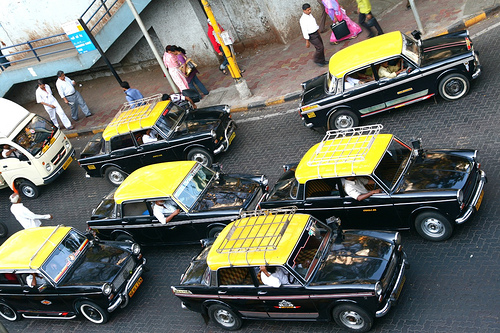
Mumbai taxis; courtesy Tom Spender

Mumbai taxis; courtesy Tom Spender

THIS post is a tribute to all those who lost their lives in senseless traffic accidents, in Mumbai, in New York, on any street anywhere in the world where a driver is speeding, perhaps under the influence of alcohol, drugs, or text message, perhaps for no reason at all, and hits a person, or two, or another car, and a body hits the pavement, and it’s too late to do anything but call for the ambulance, which in peak traffic time can take too long to arrive, so the crowd of bystanders puts the injured person in a cab and rushes him off to the closest hospital, and the cops arrive on the scene, and the driver who so unthinkingly hurtled down that street just minutes before is now shaken and shivering and looking at a life forever changed and marked, and the person bleeding his life away on the pockmarked road wasn’t doing anything different, just crossing the road like every other day of his life, and perhaps he wasn’t paying as much attention as he should, just like the driver, but he didn’t think that would mean he would end up dead, and his wife widowed and his children orphaned, all because he didn’t think to look left and right before crossing the street, and the driver didn’t think he’d actually hit anyone, because of course he has perfect control of the car and sometimes he sped up a little when he was in a hurry but he had never hurt anyone before and how had this happened in a split second, and that little girl who was in the car that passed on the other side, she shrieked and held her hands over her eyes, but she will never forget that thud as the body hit the ground, and the way the hood of the car is now misshapen, and the horrible tangle of limbs that shows that they are broken. Continue reading